Aoandon – The Blue Lantern Ghost

Translated and Sourced from Japanese Wikipedia, and Other Sources

In the 100 candles game of Hyakumonogatari Kaidankai, when the last story is told and the last light extinguished, something is said to appear from the darkness. For some in the Edo Period, that “something” had a name—Aoandon, the Blue Lantern Ghost.

Who is the Aoandon?

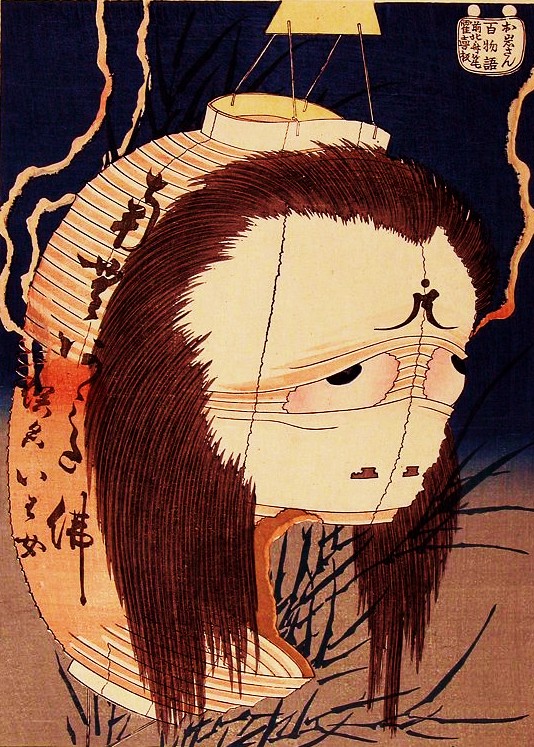
Toriyama Seiken originated the legend of the Aoandon in his kaidan-shu Konjaku Hyakki Shui (今昔百鬼拾遺; Supplement to The Hundred Demons from the Present and the Past). According to Toriyama, the Aoandon is a female spirit with long black hair, two horns poking out of her head, black, sharp teeth, and dressed in a white kimono. She is a sort of merger of the Aoi Nyobo (Blue Wife) and Hannya (Devil Woman) of traditional Japanese folklore.

The name Aoandon (青行燈) means very simply “Blue Lantern,” and is a reference to the blue-tinged lanterns that became popular as the Hyakumonogatari Kaidankai game evolved.

Toriyaam Seiken’s Aoandon

Written on Toriyama Seiken’s Aoandon picture:

“When the final lantern is doused, and the shadows hang heavy, the Aoandon appears. In modern games of Hyakumonogatari Kaidankai, the lanterns are covered in blue paper giving an eerie light. People gather on dark nights to trade stories of evil things. But to talk about evil things is to summon them.”

Blue Lanterns and Hyakumonogatari Kaidankai

The game Hyakumonogatari Kaidankai started out very simple; a hundred lit candles were placed in a room, and as ghost stories and weird tales were told in order, a single candle would be extinguished. With each story the room got progressively darker. When the final candle was expunged, some supernatural creature was said to be summoned.

Exactly what was summoned was never made clear. In one of the earliest recordings of a Hyakumonogatari Game, in the kaidan-shu Tonoigusa (宿直草), the game was played in a cave by a group of samurai. When the last candle was being put out, a giant hand appeared to come down from the ceiling. A quick slash of a the sword showed that the hand was nothing more than a spider, whose enormous shadow cast by the last candle had appeared as a giant hand.

As the game left the warrior caste and moved into the realm of the townsfolk, it evolved. In order to create a spookier atmosphere, candles were replaced by specially prepared blue lanterns to give the gathering a more mysterious feel—an early form of mood lighting. These lanterns, called andon, consisted of paper panels in bamboo frames set over candles or oil lanterns. Normally the paper was white, but for Hyakumonogatari Kaidankai gatherings the white paper was replaced with blue. (Andon can still be seen all over the world nowadays, although most of them are electric instead of burning actual candles or oil.)

The game got even more sophisticated over the centuries, and even a little bit more lazy. Instead of lighting a hundred lanterns, sometimes oil lamps were prepared with specially made wicks that counted down from one hundred. Which each story, part of the wicks was cut, bringing the light down until the final cut. Some games would place the lantern in a room away from the main gathering place, next to a mirror. After each story, the storyteller would have to walk alone into the room, cut their wick and then stare into the mirror.

Many gatherings actually cut their event short after the 99th tale, with no one being brave enough to walk into the room for the final story.

Speak of the Devil, and the Devil Appears

It has long been a tradition in Japan that talking about ghosts and monsters attracts ghosts and monsters. They need the right atmosphere to appear, and the 100 candles Hyakumonogatari Game was all about setting the right atmosphere. If you talk about it, it will come.

But until Toriyama Seiken wrote about the Aoandon in his Konjaku Hyakki Shu, there was no consensus on what appeared. Toriyama did what he often did when inventing new yokai; he took a common phrase or word and imagined a spirit to go along with it. In the case of the Aoandon, he imagined the extinguishing of a blue lantern, and the ghost woman that might be waiting in the dark, or looking back at you from a mirror.

Like many of Toriyama’s creations, there were attempts to craft a story onto the Aoandon. Artists Kondo Misaki imagined a woman consumed by jealousy who transformed into a yokai and was cursed to haunt these blue lanterns, waiting for her chance to appear. When the mirror aspect of Hyakumonogatari Kaidankai was invoked, she served as Japan’s version of Bloody Mary, a test of courage and the tricks your mind can play on you when you are alone with a mirror in a darkened room.

Translator’s Note:

The Aoandon is not exactly the most exciting yokai—pretty much a name and a picture—but since this is officially my 100th post on Hyakumonogatari Kaidankai (and my blog finally lived up to its name) I thought it was time for the Aoandon to appear. I am nothing if not a traditionalist.

However, this particular game of Hyakumonogatari Kaidankai is far from over. I have lots more yokai to do and many more Japanese ghost and monster stories to translate for you. Thanks for reading!!

Takaonna – The Tall Woman

Translated from Mizuki Shigeru’s Mujyara and Japanese Wikipedia

The takaonna (tall woman) is a yokai with an interesting hobby. If she is walking along, and sees a two-story brothel, she stretches the bottom half of her body so she can peek in on men enjoying the delights inside. It’s said that the takaonna was a homely woman who could never attract male companionship, changed into a yokai by her own desire.

Takaonna were first illustrated by Toriyama Seiken in his The Illustrated Night Parade of a Hundred Demons (Gazu Hyakki Yagyo ). He drew a picture and a name, but with no story or explanation for the stretching yokai.

Folklorist Fujisawa Morihiko first recorded the story of the ugly woman peeking into brothel windows in his book Complete Discussions of Yokai (Yokai Gadan Zenshu), although he speculates that the local legends of the takaonna probably came from people seeing Toriyama’s illustration, then imagining a story to go along with it. Novelist Yamada Norio furthered the legend of the takaonna in his book Travels in the Weird Tales of Tohoku (Tohoku Kaidan no Tabi). Yamada tells of a woman consumed by jealousy and lust but too ugly to get a man, who then transforms into the takaonna and menaces anyone enjoying the pleasures of the flesh that she was denied.

There is a possible (but obscure) connection to a more horrible creature from Wakayama prefecture, a female demon called the takanyobo (tall wife).

It is said that the takanyobo was once the wife of Kijishi, a woodcutter of Kizaku village. She was a strong woman who would go and cut wood with him in the forest. He thought he was a lucky man to have such a wife, but she was actually a yokai. Kijishi was a successful woodcutter, and he always kept a servant. But the servant wouldn’t stay long. Over a year, Kijishi went through 30 servants. It was only when his own baby also disappeared that Kijishi discovered the truth at last—his yokai wife had eaten them all.

Kijishi confronted his wife and threw her into a well. He thought to let her die down there, but to Kijishi’s surprise she stretched the bottom half of her body right to the top of the well, then clambered out and made her escape into the night.

Translator’s Note:

The kanji for the tall woman is exactly what it says 高 (taka; tall) + 女(onna; woman). She is most likely an original creation of Toriyama Seiken, who apparently wasn’t feeling very creative because he didn’t give her a story. Fortunately the people of the Edo period filled in for him, and came up with a nice little urban legend based on his image.

I think the connections are obvious between the takaonna and the later kuchisake onna (split-mouth woman). Both yokai are urban legends more than folklore, both are hideously ugly women, and both have a grudge against the beautiful people they can never be, and the love (or sex) they can never share.

Further Reading

For more female yokai stories, you should read:

Bakeneko Yujo – The Bakeneko Prostitutes of Edo
Nure Onago – The Soaked Woman
The Long-Tongued Old Woman

What Does Yokai Mean in English?

To learn much more about Japanese Ghosts, check out my book Yurei: The Japanese Ghost

You probably think you already know what yokai means. And, you are probably wrong. Or at least, you are only partially correct. There is more to yokai than you think.

Thanks to movies like “The Great Yokai War,” and comics and books like “Nura: Rise of the Yokai Clanand “Yokai Attack!,” yokai as a word is slowly making its way into the English language. People are becoming aware of Japan’s legacy of magic and mystery. But, “yokai” is entering English with a meaning almost-but-not-quite the same as the Japanese meaning.

It is kind of like the word “manga”—in English, manga has come to mean “Japanese comics.” Exclusively. But in Japanese, manga just means … comics. All comics. Regardless of national origin. Iron Man? Manga. Mickey Mouse? Manga. Rex Morgan, M.D.? Manga. Tin Tin? Manga. And it doesn’t even specifically mean books (That would be “manga no hon.”) “Manga” can mean toys, movies, games … anything comic-related. It has a vast meaning beyond the limited scope of usage that we have given the word in English. I digress.

Of course, yokai can refer to Japan’s menagerie of monsters. All of the beasties and spirits—the baku, the kodama, the yuki onna, the kappa—all of these are yokai. I am as guilty as the next person for using yokai as a generic term for “Japanese monster.” It works. It fits. But that’s not the whole story.

Many other things are also yokai, things that are not creatures of any sort. Like the word manga, the Japanese usage of yokai has a much larger scope. It covers much more than just monsters.

(It is worth noting that “Nura: Rise of the Yokai Clan” isn’t called that in Japanese. The original title is “Nurarihyon no Mago” meaning “Nurarihyon’s Grandson.” The term “Yokai Clan” was tagged on to appeal to English readers.)

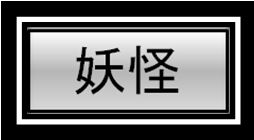
Breaking Down the Kanji – 妖怪

Like most Japanese words, the key to the meaning is in the kanji. So let’s start there.

Yokai uses two kanji;

  • (yo) which means “mysterious, bewitching, unearthly, weird.” It doesn’t really have a scary nuance to it, but more of the attraction to something beyond the normal. It can be used in words like yoka (妖花) meaning an ethereally beautiful flower, or ayashii (妖しい) meaning bewitching or charming.
  • (kai) which means “mystery, wonder, strange.” Kai has more of a sense of horror, or the bizarre. It is the same kanji used in kaidan (怪談) meaning “weird tales” and kaiki (怪奇) meaning “bizarre, strange, outrageous.”

Put those two together and you get yokai妖怪, with a direct translation along the lines of “something that is otherworldly and strange yet captivating and appealing.” But direct translation of kanji almost never gives the full picture.

So, What Does Yokai Really Mean?

I think a better translation would be “mysterious phenomena”—or even “Fortean phenomena” if that means anything to you. “Mysterious phenomena” is probably better.

Along with folkloric creatures, yokai can refer to things like strange weather, mysterious illnesses, optical illusions, weird fruit, etc … And yokai is not limited to Japan. In his Yokai Encyclopedias, comic artist/folklorist/genius Mizuki Shigeru covers things like the Moai statues on Easter Island, or bigfoot and the yeti, or vampires and ghouls, or rains of frogs. Yokai is a broad, sweeping term that can cover pretty much everything weird on Earth.

Here’s what Japanese Wikipedia has to say:

“Yokai as a term encompasses oni, obake, strange phenomenon, monsters, evil spirits of rivers and mountains, demons, goblins, apparitions, shape-changers, magic, ghosts, and mysterious occurrences. Yokai can either be legendary figures from Japanese folklore, or purely fictional creations with little or no history. There are many yokai that come from outside Japan, including strange creatures and phenomena from outer space. Anything that can not readily be understood or explained, anything mysterious and unconfirmed, can be a yokai.”

That great arbitrator of all things yokai, Mizuki Shigeru, further breaks down the word yokai into four separate categories:

  • Kaiju – 怪 (kai, mysterious) + 獣 (ju; beast), meaning “monster.” Most of Japan’s famous yokai are kaiju. Godzilla is a dai-kaiju, or “great monster.”
  • Choshizen – 超 (cho; super) + 自然 (shizen; natural), meaning the supernatural, including mysterious natural phenomena.
  • Henge – 変 (hen; strange) + 化(ge; to change, transform) , meaning shape-shifters like tanuki, foxes, and old cats.
  • Yurei -幽 (yu; dim) + 霊 (rei; spirit), meaning ghosts, and spirits of the dead.

So if you think in the classic biological classification model, then you would have something like this:

  • Bakeneko is a yokai > henge
  • Oiwa is a yokai > yurei
  • Bigfoot is a yokai > kaiju
  • Bermuda Triangle > yokai > choshizen

(Very) Brief History of the Word Yokai

Yokai is a pretty old world, pre-dating most of Japanese folkloric vocabulary. The oldest known use of “yokai” is from the 1st century text “Junshiden” (循史伝) where the author writes “The yokai was in the Imperial Court for a long time.” The term is used to describe a sense of unnatural anxiety and foreboding. It shows up again in 772, in “Shoku Nihongi” (続日本紀) where a ritual cleansing of the palace is recommended to “clear away the yokai.” It isn’t used in the sense of any particular bad creature, but just accumulated “bad juju” that might be clinging to the palace.

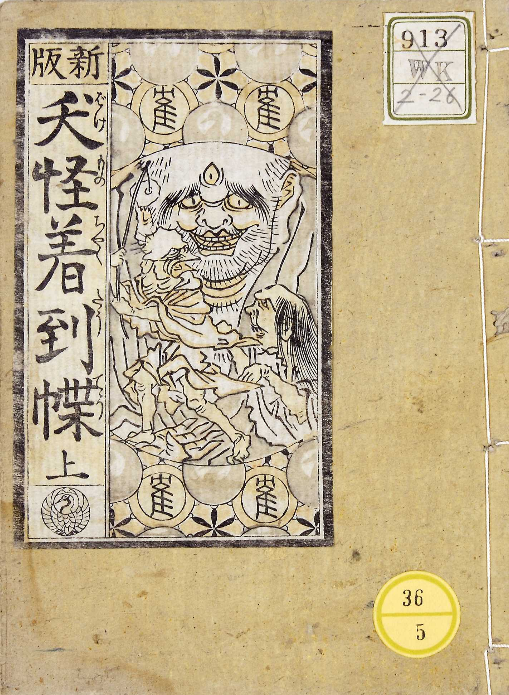
Yokai as a term for Japan’s folkloric beasts didn’t really appear until the Edo period, with the publication of “Yokai Chakutocho” (夭怪着到牒 ), a yokai bestiary of the kind still familiar today. Sharp-eyed readers ( or those who know Japanese) will see that a different set of kanji was used; 夭 (yo, calamity, disaster ) + 怪 (kai). That kanji has a much more distinct menacing feel to it.

Texts from the Edo period also distinguish between types of yokai, such as “strange natural phenomenon” or “strange living things.”  Also during the Edo period, when Japan began to have contact with other cultures, books began to be published of accounts of “Yokai of the West.”

Now you Know What Yokai Means!

Of course, this is the quick and dirty version.  Whole books can and have been written on yokai, on the history of yokai, on the evolution and social meaning, etc … At least now when you want to start diving into things like that, you will have a clearer understanding of what the word yokai actually means!

Further Reading:

Secrets of the Yokai  – Types of Yokai

Secrets of the Yokai II

How Do You Say Ghost in Japanese?

Translator’s Note:

I wrote this article mainly to clear up some misapprehensions.  More and more I see people refer to yokai as if it meant some sort of tribe of Japanese monsters.   And while that isn’t exactly incorrect, it is a simplification. So here is a little deeper dive for yokai fans.

Baku – The Dream Eater

Translated from Mizuki Shigeru’s Mujara and Japanese Wikipedia

When a child in Japan wakes shaking from a nightmare, she knows what to do. Hugging her face in her pillow, she whispers three times “Baku-san, come eat my dream. Baku-san, come eat my dream. Baku-san, come eat my dream.” If her request is granted, the monstrous baku will come into her room and suck the bad dream away. But the baku cannot be summoned without caution. A too-hungry baku might not be satiated with a single dream, and might suck away her hopes and ambitions along with it, leaving her hollow.

What is a Baku?

Baku are classic chimera; the body of a bear, the nose of an elephant, the feet of a tiger, the tail of an ox, and the eyes of a rhinoceros. One legend says that when the gods were finished creating the animals, they took all of the odds and ends lying around and put them together to make the baku.

According to Japanese legend, baku are the eaters of bad dreams. They are a talismanic figure, that people pray to at night to come and suck away nightmares so that they may never be seen again. But there is a darker side to the baku; some say that baku eat all dreams, not only nightmares. This includes dreams of aspiration, dreams of your future, and dreams of hope.

Is the Baku Real?

While they are wildly stylized, baku resemble the Asian tapir. And in fact, in Japanese they share the same name and kanji (獏). The baku is not alone in this; the word kirin is not only Japanese for giraffe but also a mythical Chinese monster.

Which came first—the legend or the animal—is hidden in the past, with no solid agreement on either side. Many say that the two are unconnected, and that the similar appearance is pure coincidence, with the animal being named after the legend. Some say a wayward sailor drifted to Malaysia, and came back with stories of a massive creature that was transformed by legend.

Either way, the legend is old in his book “Ancient Chinese Gods and Beasts,” Kyoto University professor Hayashi Minao points to ancient bronze ware and other artifacts inscribed with images of the mythical baku. He postulated that some creature like the Asian tapir might have existed in China at sometime, but has since gone extinct.

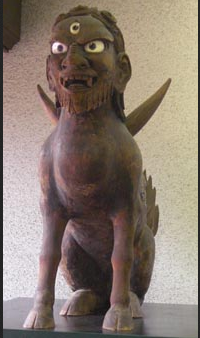
Baku are often confused with another Chinese legendary animal, the hakutaku (called a bai ze in Chinese). In fact, at Gobyakukan-ji temple in Tokyo, there is a statue called the Baku King, which was originally a statue of a hakutaku.

Is the Baku a Yokai?

A complicated question, that depends on how broad your definition of a yokai is. It isn’t a yokai in the sense of fantasy creatures like the nure onago or bakeneko. It is more of a sacred animal, more associated with gods than monsters. Mizuki Shigeru uses the broadest possible definition of yokai, meaning anything mysterious from Bigfoot to rains of frogs, by which the baku definitely qualifies.

The History and Legends of the Baku

Like many folkloric creatures, baku have changed over the centuries. In the oldest Chinese legends, baku were hunted for their pelts. It was said that using a blanket made from a baku was a talisman against illness and the malice of evil spirits. Due to a lack of available baku pelts, this eventually changed to where putting an image of a baku over the bed would afford you equal protection. During the Tang dynasty( 618 – 907), folding screens decorated with baku were a popular item.

Somehow, the legend of the baku was transmitted to Japan, where the beast became associated with the dream eating that it is best known for today. The Tang period book Torokuten (Six Stories of the Tang dynasty) also tells of a sacred animal called a bakuki that eats dreams, and it is likely that the two were merged into a single legend.

The baku legend as a dream-eater has stayed consistent since adopted by Japan. There have been various ways of summoning the baku. In Fukushima it is said that if, after awaking from a bad dream, you say “I give this dream to the baku,” then that dream will never trouble you again. In other prefectures, you repeat “Baku-san, come eat my dream” three times in a row to summon to baku to come and eat your nightmares.

During the Muromachi period (1337 to 1573) in Japan, it became popular for people on their death bed to hold an image of a baku as a talisman against evil spirits. They also became associated with the fantastical Treasure Galley, which often had a baku painted on its sails. During the Edo period (1603 to 1868), pillows were sold in the shape of baku, said to protect the sleeper from bad dreams.


Baku in Modern Japan

While many yokai and legendary creatures have faded until they live only in the memory of academics and comic artists, baku are still a popular figure in modern Japan. The baku appears in many modern animation and comic books, although in appearance they look more and more like authentic tapir, and less and less like the folkloric chimera.

Shudan Borei – A Group of Ghosts


shudan borei

To learn much more about Japanese Ghosts, check out my book Yurei: The Japanese Ghost

Translated from Mizuki Shigeru’s Mujara

On July 28th, Showa 30th (1955), in a heartbreaking incident 36 junior high school girls drowned on a beach in Mie prefecture. Of the nine girls who survived the incident, five had the same story to tell.

The girls were all playing and swimming in the calm waters, enjoying the gentle lapping of the waves. Without warning, the water seemed to gather together, and a dark mass rose from the surface of the ocean. The mass took the shape of people in WWII air-raid hoods, dark in color, soaking wet and pouring water from every surface. As the mass rose, the figures become more defined, dressed in old-fashioned women’s work pants. There were hundreds of them.

The girls tried to get away, but the water seemed to be sucked up towards the dark figures, dragging the girls towards them. One of the girls who survived said she felt a hand grab her leg and try and pull her under the water. She was able to break the hands grasp and make her way to the shore, but her friends were not so lucky.

Afterwards, students who were on the beach and not in the water confirmed the story and all of its details. They saw the ghosts rising and dragging the girls under the water.

After investigating the incident, it was discovered that exactly ten years before the incident, U.S. aircraft had firebombed that area, killing around 250 people. The bodies were not cremated, but were piled without ceremony into a mass grave on that beach. In this way one tragedy became two tragedies, as the ghosts of the war dead rose up again.

Translator Note:

The kanji for this is集団 (shudan, meaning “group” or “gathering”) and亡霊 (borei, which is a somewhat Gothic term for “ghost”).

This story is based on a actual event, called the Kyohaku Junior High School Drowning Incident (橋北中学校水難事件) in Japanese. The school had gone to the beach as their annual excursion, and as swimming practice for the girls. At the time, swimming had been added to the official school curriculum, but as the school had no pool swimming practice was held in the nearby, usually calm ocean.

The school principle and teachers were arrested and charged with negligence—the school was short-handed and had not brought along the required number of adult observers, and parents claimed their children were not yet strong enough swimmers to be unsupervised in the ocean. Ultimately, they were found not-guilty and cleared of charges. The girls’ deaths were ruled a mysterious, unfortunate accident. A pool was quickly built for the school, and the students no longer practice swimming in the ocean.

Observers reported a sudden swelling of the waves and a rise in the water level that drowned the girls. Of the nine surviving girls, five reported a sensation of pulling on their legs, as if the sand was sucking down on their feet, holding them down while the water rose. Several also reported seeing the dark shape of women in air-raid hoods rising from the water.

In 1956, the Ise Newspaper reported on the story of the war dead buried on the beach, noting that most of the dead had been refugees and were thus buried without name or ceremony. In 1963, one of the girls published an article in a Joshi Jishin magazine (Women’s Own Stories) called “How I survived an Encounter with a Ghost” that further spread the supernatural origin of the drowning.

Several scientific explanations have been offered for the sudden swelling of the water based on the geographical features of the beach, along the supernatural one. It is clear Mizuki Shigeru prefers the supernatural explanation.

The beach remains off-limits for swimmers. A year after the incident, a shrine was raised on the location, and a statue called the Goddess of Protecting Swimmers in the Ocean was placed on the beach as a memorial.

Further Reading:

For more tales of haunted oceans, read:

Umi Bozu – The Sea Monk

Funa Yurei – The Boat Ghosts

Nure Onnago – The Soaked Woman

Previous Older Entries

Copyright notification

All translations and other writing on this website were created by Zack Davisson and are copyright to him.

Copyright notification

In accessing these web pages, you agree that any downloading of content is for personal, non-commercial reference only.

No part of this web site may be reproduced or transmitted in any form or by any means, electronic, mechanical, photocopying, recording or otherwise, without prior permission of Zack Davisson.

Copyright notification

For rights clearance please contact Zack at:

zack.davisson (at) gmail.com

Thank you.