Oseichu – The Mimicking Roundworm

Mizuki_Shigeru_Oseichu

Translated and Sourced from Mizuki Shigeru’s Mujyara, Japanese Wikipedia, and Kaii Yokai Densho Database

It starts with a high fever and some stomach pains, and ends with a giant mouth poking out of your own stomach, speaking in your own voice demanding food and drink. It’s bad enough getting sick, but you don’t want to catch a yokai disease. Especially you don’t want to get infected by an oseichu, a mimicking roundworm.

What Does Oseichu Mean?

Oseichu is made up of three kanji – 応 (O; affirmative, agreements ) + 声 (sei; voice) + 虫 (chu; worm, bug). The three kanji translate roughly into “Voice Mimicking Bug,” all though the word “bug” refers more to the infectious disease type than the insect type.

The term osei (応声) is really only used in relation to this yokai. In fact, sometimes the “chu” is dropped altogether and it is just called an osei.

The Oseichu of Chusaburo

This is a story from the 16th year of Genroku (1703 CE). The laborer Shichizaemon lived with his family in Tokyo. One day, his son Chusaburo was struck down with a terrible fever and pain in his stomach. The illness continued, and after a few days they could see a boil growing form the son’s belly. The boil kept growing larger and spreading until it resembled a massive, human mouth. Everyone in the family was shocked when the boil finally opened its mouth, and began speaking in Chusaburo’s own voice. The voice began demanding food, and anything shoved into the giant mouth soon disappeared. The mouth was never satisfied and demanded more and more food, while Natsaburo was slowly starving to death, deprived of sustenance.

Shichizaemon tried every medicine he could find, and summoned exorcists and sorcerers of all type to help the misfortune of his child, but to no avail.

At his wit’s end on how to help his son, Shichizaemon sent for the famous doctor Kan Gensai. The renowned physician took one look at Chusaburo and declared that he was infected with an Oseichu. Dr. Gensai whipped up a special blend of six medicines, and fed them directly into the extra mouth protruding from Chusaburo’s belly. After the first day, the mouth ceased to speak and the boil reduced in size. By the second day, Chusaburo expelled a giant worm from his anus—33 centimeters long. The worm looked like a lizard, with an arrow shaped head and long body. It tried to run away, but everyone in the room immediately set upon it and beat it to death.

With the Oseichu expunged, Chusaburo made a complete recovery.

Yokai Diseases and Mysterious Bugs

The oseichu is thought to have come to Japan from China, where there are similar stories based off of real-life parasitic worms like roundworms. Oseichu is a good example of how yokai can be many things, from giant, one-eyed monsters down to strange, infectious diseases. Oseichu are not a type of monster, but are considered a type of kibyo (奇病; Strange Illness) brought on by kaichu (怪虫; Mysterious Bugs). It is easy to see how roundworms can become yokai. A sudden fever and feeling of hunger, finishing with a large worm being expelled from the anus—that must have been terrifying to those who weren’t aware of what was happening.

The oseichu is found in three Edo period collections; the Shin Chomonju (新著聞集; New Collection of Famous Tales), the Shiojiri (塩尻; Salt’s End), and the Kanden jihitsu (閑田次筆; Continued Tales of a Fallow Field).

Both the Shin Chomonju and Shiojiri tell tales similar to The Oseichu of Chusaburo, with only slight variation. Shin Chomonju sets the story in Tokyo, while Shiojiri says the mysterious illness occurred in the Abura no Koji district of Kyoto. Shiojiri also says the medicine took 10 days instead of 2.

The Kanden Jihitsu tells a similar, but different story. In the 3rd year of Genbun (1738) , a side show manager running a Misemono (Seeing Things) show in Tamba province (modern day Kyoto) heard a rumor about a woman infected by an oseichu. He immediately went to her house to attempt to recruit her for the show, and was stunned to find an authentic case of the disease. An unmistakable voice came from the woman’s belly. The woman’s husband was ashamed of her condition, however, and would not allow her to be displayed. The disappointed side show manager went home empty handed.

Translator’s Note:

It’s November, and that means Thanksgiving Day in the US! And Thanksgiving Day means eating so much your stomach hurts afterwards, and that got me thinking about Oseichu.

Oseichu is an odd yokai. It doesn’t appear very often in yokai collections. I would like to that’s because it is gross, but yokai have never let being gross bother them! This one is clearly a supernatural version of a natural disease/parasite – the roundworm. Something I hope I never have to experience in real life!

Further Reading:

For more bizarre yokai, check out:

Jinmenju – The Human Faced Tree

Inen – The Possessing Ghost

Kejoro – The Hair Hooker


What’s the Difference Between Yurei and Yokai?

Yokai_or_Yurei

To learn much more about Japanese Ghosts, check out my book Yurei: The Japanese Ghost

What is a yokai? What is a mononoke? What is a bakemono? Are yurei also yokai? These seemingly basic questions have no precise answers. Almost everyone has their own ideas, and they seldom agree with each other. Because folklore isn’t a science.

Defining these words is like trying to define “monster” or a “superhero.” I have seen (and participated in, ‘cause that’s how I roll) debates on whether the xenomorph from the “Alien” films belongs in a category of “movie monsters.” Some say that because it is an “alien”—and aliens aren’t traditional folkloric monsters—it can’t be a monster. (I disagree.) But the word “monster” isn’t clearly defined. Basically, anything scary can be a monster. So by that token, are ghosts “monsters?” What about “human monsters” like serial killers? Dragons in fantasy movies? When does something stop being a monster? Or start being a monster? What about the Cookie Monster? Or Monsters Inc.?

And how about superheroes? Even though he lacks super powers, Batman is generally accepted as a superhero, but how about Sherlock Holmes? Or Tarzan? Or Gilgamesh, Beowulf, and Heracles? Where do you draw the line? Should the line be drawn at all? Does popular consensus matter?

As you can see, there is no real answer. Just opinions. And almost all of the great folklore researchers have their own opinions. They disagree with each other on the definition and categorization of yokai, on exactly what a yokai is and if a yurei counts as a yokai or not. Almost every book on yokai and yurei begins with the definition of terms—what that particular researcher/writer considers to be a yokai or a yurei.

You just kind of have to pick your camp and decide who makes the most sense to you. Or start your own camp, because that’s valid too. Just don’t expect anyone to agree with you.

Etymology of Yurei and Yokai

Hansho

Hansho from Osaka Prefectural Library

Like (almost) all kanji, the characters for yurei and yokai originate from Chinese. According to researcher Suwa Haruo, the kanji for yurei (幽霊) first appeared in the works of the poet Xie Lingyun who wrote during the time of China’s Southern Dynasty (5 – 7 CE). The kanji for yokai (妖怪) appeared much earlier, in the classical 1st century Book of Han (漢書) which coincidentally also records the first known mention of the island of Japan. (Strange that the first known use of yokai and the first known mention of Japan appear together—there is some deeper meaning in that!)

Neither word has quite the same meaning in Chinese as it does in Japanese. Chinese uses the kanji 鬼 (gui) to mean ghost, which was imported into Japanese as the word “oni.” And the Chinese usage of 妖怪 (yokai) refers specifically to human beings under some sort of supernatural influence. (This is all according to Suwa Haruo, by the way. I have no personal knowledge of the Chinese language!)

Japan imported both terms, with yokai first appearing in the 797 CE history book Shoku Nihongi (続日本紀 ; Chronicles of Japan Continued), the second of the six classical Japanese history texts. Yokai described an unseen world of mysterious, supernatural phenomena. The term represented something invisible, without form or identity; a mysterious energy that pervaded the deep forests, oceans, and mountains.

In truth, the word “yokai” was barely used at all. Ancient Japan had a more common name for this invisible, mysterious energy—mononoke. The idea of mononoke was something to fear—a mysterious, natural force that could come out any time and kill you, like a lightning strike or a tidal wave. It took the artists of the Heian period to give form to this mysterious energy, and transform the mononoke into bakemono, changing things. And then it took the writers of the Edo period to take these shapes and give them stories. Few of these artists and writers would have recognized their work as “yokai.”

Yokai as a word only came into general use the during the Meiji period, thanks to folklorist Inoue Enryo (1858 – 1919). He founded a field of study he called Yokaigaku, or Yokai-ology. Inoue used the term “yokai” in the same way we would say Fortean phenomenon—meaning any weird or supernatural phenomenon. Wanting Japan to move into the modern world, Inoue used the term “yokai” to point out the foolishness of believing in such things in a scientific age, and vowed to shed light into the dark, superstitious corners of Japan. He hoped to eradicate “yokai” by studying it and explaining it scientifically.

Yanagita Kunio’s Yurei vs. Bakemono
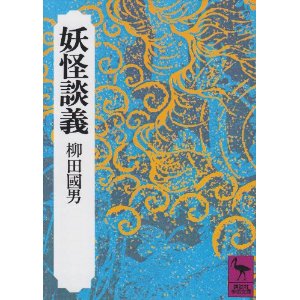
Yokai DangiYokai Dangi cover from Amazon.co.jp

Yanagita Kunio took the next attempt at parsing out the various folklore and coming up with some kind of workable system or definitions. Yanagita put differentiated between “obake/obakemono”—being bound to a particular place, and “yurei”—being able to move freely, yet bound to a specific person. Here’s what he said in his Yokai Dangi (妖怪談義;Discussions of Yokai):

“Until recently there was a clear distinction between obake and yurei that anybody would have realized. To start with, obake generally appeared in set locations. If you avoided those particular places, you could live you entire life without ever running into one. In contrast to this, yurei—despite the theory that they have no legs—doggedly came after you. When [a yurei] stalked you, it would chase you even if you escaped a distance of a hundred ri. It is fair to say that this would never be the case with a bakemono. They second point is that bakemono did not choose their victims; rather they targeted the ordinary masses … On the other hand, a yurei only targeted the person it was connected with … And the final point is that there is a vital distinction regarding time. As for a yurei, with the shadowy echo of the bell of Ushimitsu [the Hour of the Ox, approximately 2-2:30 AM], the yurei would soon knock on the door or scratch on the folding screen. In contrast, bakemono appeared at a range of times. A skillful bakemono might darken the whole area and make an appearance even during the daytime, but on the whole, the time that seemed to be most convenient for them was the dim light of dust or dawn. In order for people to see them, and be frightened by them, emerging in the pitch darkness after even the plants have fallen asleep is, to say the least, just not good business practice.”

Translation from Pandemonium and Parade: Japanese Monsters and the Culture of Yokai.

In Ikeda Yasaburo’s book Nihon no Yurei he almost agrees with Yanagita, seeing two distinct types of yurei. The first kind, as evidenced by the story The Chrysanthemum Vow, show a spirit with a specific purpose and attachment towards another human being. They have the ability to travel, to move “a hundred ri” as Yanagita puts it. The other kind of spirits, as evidenced by The Black Hair, are those spirits bound to a particular place. They may have some sad story keeping them put, but ultimately it is the location that matters.

Ikeda says:

“Usually I just call both types yurei, but it might make sense to make a distinction. You could call the first group—the ones bound to a specific person—yurei, and the second group—those bound to a specific location—yokai. But these groupings are just made for ease of discussion. In truth, the spirit realms are far too complicated for simple classification; any rule or distinction you make is immediately broken.”

Obviously, Ikeda is correct; Yanagita’s distinctions fail the simplest of tests. Look at three of Japan’s most famous ghosts, Okiku (Bancho Sarayashiki), Oiwa (Yotsuya Kaidan), and Otsuyu (Botan Doro). The plate-counting Okiku is bound to her well, and by Yanagita’s definition would be an obakemono and not a yurei. Oiwa is free to travel where she wills, but doesn’t care at all about the Hour of the Ox. When she appears at her husband’s wedding, it is the middle of the day. And the Chinese origin of Otsuyu means that she obeys almost none of Yanagita’s rules, making her neither obakemono nor yurei.

Yanagita was one of Japan’s first folklorists, and a great researcher and gatherer of tales, but I often disagree with his conclusions. Not for any fault of his own; Being the first, he was operating with a limited amount of materials and information, and not able to discuss or cross-reference his findings.

Mizuki Shigeru’s Inclusive Yokai World

Mizuki Shigeru Yokai ParadeJapanese Yokai battle Western Yokai in Mizuki Shigeru’s Great Yokai War

Mizuki Shigeru takes a much broader approach, In his Secrets of the Yokai – Types of Yokai he put everything under the general term of “Yokai” (or “Bakemono,” which he considers the same thing”) and then broke it down into four large categories, one of which is “Yurei.” Mizuki started studying yokai seriously in his 60s when he had largely retired from drawing his famous Kitaro comic. He also did something Yanagita Kunio had never done—he traveled the world and learned about the folklore of other countries, and compared it to his native Japanese folklore he knew so well. From this, he developed a definition of yokai that was as inclusive as possible, broadening the use of the word “yokai” outside of Japan to include “Western yokai” and monsters, and the natural phenomenon and deities of all countries.

Mizuki’s approach is the most widely accepted today, as seen by the Japanese definition of yokai from Wikipedia:

“Yokai as a term encompasses oni, obake, strange phenomenon, monsters, evil spirits of rivers and mountains, demons, goblins, apparitions, shape-changers, magic, ghosts, and mysterious occurrences. Yokai can either be legendary figures from Japanese folklore, or purely fictional creations with little or no history. There are many yokai that come from outside Japan, including strange creatures and phenomena from outer space. Anything that can not readily be understood or explained, anything mysterious and unconfirmed, can be a yokai.”

I personally fall into Mizuki’s camp—I believe yokai are so much more than just Japanese monsters. In fact, if you look at Toriyama Sekien’s yokai encyclopedias many Japanese yokai did not originate in Japan—they are characters from Chinese folklore or Indian Buddhism added to Japan’s pantheon. And even inside Japan, yokai encompass so much more than monsters. There are yokai winds. Yokai illnesses, Yokai transformed/possessed humans. Pure yokai monsters.

But then again, I am as guilty as anyone for also using the word yokai as a shorthand for Japanese monsters. Because it is convenient, and gets the meaning across in a simple fashion. And sometimes, convenience trumps accuracy. Because folklore isn’t a science.

Yurei and Yokai – Dead Things

yureisankakuboshiYurei entry from Toriyama Sekein’s Hyakkai Yagyo

Then you get into a whole other area—Are yurei a type of yokai? Or are they something different? Again, there is no universally accepted answer. Yanagita Kunio considered yurei to be yokai, but not bakemono. Mizuki Shigeru considers yurei to be one of the Big Four categories of yokai. Matt Alt calls yurei and yokai out as two separate things in his books Yokai Attack! and Yurei Attack!: The Japanese Ghost Survival Guide. (I respectfully disagree.)

To me, this is the easiest question—of course, yurei are yokai. All you have to do is look at the yokai collections from the Edo period. Yurei were always included as entries. Edo period kaidan-shu freely mixed ghost and monster stories. Games of Hyakumonogatari Kaidankai always included strange stories of any type, with no differentiation between yurei and yokai. They were all just “weird tales.”

For that matter, some yokai monsters are in fact dead humans who returned as yokai. Many things can happen to a human spirit after death. They can move on to peace, transform into a yurei and haunt away, or transform into a monster with a life that lasts far beyond their death. Perhaps the most famous example is the Emperor Sutoku who died and was reborn as the Evil King of the Tengu, a story that appears in both the Hōgen Monogatari and Tales of Moonlight and Rain (Translations from the Asian Classics)
. Or there is the massive Gashadokuro, sometimes said to be the assembled bones of people who died of starvation. Or Dorotaro, the spirit of a farmer whose fields were mistreated by his son.

There are many others. Yurei is clearly just one form a human being can manifest as after death. They can become kami. They can become yurei. They can become yokai. All though saying “they can become yokai” is redundant, as they are all yokai.

Religion and Yokai – Degraded and Unworshiped Gods

Another thing Yanagita Kunio says—and this I agree with him on—is that some yokai are the traditional, historical, and forgotten gods of Japan. In his book Hitotsume Kozo he outlines his “degradation theory,” showing how ancient gods are slowly demoted into small-time monsters, and then folktales. He uses the kappa as an example. Once a powerful water deity—and there are still a few kappa shrines in Japan—the kappa was demoted over the centuries to a beastly monster, to something almost harmless, until now it is little more than one of Japan’s “cute character mascots.”

Many yokai also share strong ties with Buddhism. During the Edo period Kaidan Boom, several strange monsters and gods were imported from India and China and recast in roles as Japanese yokai. As with Yanagita’s degradation theory, these once-mighty beings become silly goblins in the Japanese pantheon,

Komatsu Kazuhiko put forward  the idea that yokai are sort of the B-List of the kami pantheon, the “unworshiped gods.” It has long been thought that spirits can be transformed into kami via ritual and worship. By that measure, yokai are simply proto-kami, amassed spiritual energy that has managed to take form, but needs the extra boost from human worship to advance to the next stage and become a true kami.

Just as many yokai have no connection to religion at all. Toriyama Sekein created a host of yokai for his books, some of which were just ghostly twists on plays on words or popular phrases. Kyokotsu the Crazy Bones being one of the most obvious examples. A few hundred years later, and these Toriyama-invented yokai are considered just as valid as something like a kappa that is thousands of years older.

Modern Yokai

Kitaro Mizuki Shigeru Cover

When you ask “What’s the Difference Between Yurei and Yokai?” you sort of have to decide if you mean historical, or modern. In the Edo period and older, there was absolutely no difference. You go back even further, and yokai and yurei are indistinguishable. But as we move more and more into the modern manga-influence era, where yokai are being used as characters in comics, and the meanings of the words appear to be changing.

I think manga is the biggest influence on yokai today. Comics like Kitaro, Inuyasha, and Nura: Rise of the Yokai Clan are teaching a new generation of readers what yokai are, and it is something entirely different from what Yanagita Kunio recorded in his notebooks. Modern yokai have distinct personality and complex motivations, instead of Yanagita’s repetitious monsters bound to their locations and lacking true motive power. And yurei are being left out of the party, treated as something different from yokai entirely.

kejoro Nura Clan YokaiKejoro from Nura: Rise of the Yokai Clan

Those manga yokai are probably just as valid as Toriyama Sekein’s yokai catalog. The definitions of yurei and yokai have changed over the centuries, and will continue to change going into the future. Because “change” is at the heart of yokai. They mold to meet the needs of the current generation. They are mutable.

In his book Pandemonium and Parade: Japanese Monsters and the Culture of Yokai, Michael Dylan Foster puts it best. He says he ”intentionally leaves the definition open-ended, for the history of yokai is very much the history of efforts to describe and define the object being considered.”

Translator’s Note:

This is a long, rambling answer to a question by reader Chiara Leerendix, who was having a debate with her professor on the differences between yurei and yokai. He claimed that yurei were spirits of the dead and related to death and religion, while yokai were just monsters without any deeper meaning or religious connection. Obviously, I disagree with that. But the debate is ongoing.

While I don’t have an exact answer for Chiara, hopefully this will provide her with some good arguing points to take to her professor. Of course, her professor is welcome to respond to this post as well!

6 Types of Japanese Yokai From Showa

Mizuki_Shigeru_Showa_Book

In Showa period Japan belief in yokai was waning but could still be found, especially in the countryside and rural provinces. Mizuki Shigeru—Japan’s most honored and beloved author of yokai manga and the person directly responsible for yokai still being known in Japan today—has several first-hand encounters with yokai in his life. He detailed several of these encounters in his comic series Showa 1926-1939: A History of Japan

Being primarily a history series and not a yokai series like Kitaro, Showa 1926-1939: A History of Japan doesn’t come with a Yokai Glossary except as included in the extensive notes section in the back. As the translator of the comic, I also put together this collection of articles on all of the yokai that appear.

Here they are, in no particular order. Click on the links to go to the individual articles and learn more about these amazing yokai!

6. Nezumi Otoko – Rat Man

Nezumi Otoko

A Mizuki Shigeru original, Nezumi Otoko is the Donald Duck to Kitaro’s Mickey Mouse. A scoundrel and reprobate who does everything wrong, he is also Mizuki Shigeru’s favorite character. As Mizuki himself says, without Nezumi Otoko he has no story.

Nezumi Otoko is the narrator of Showa 1926-1939: A History of Japan, popping in occasionally to share some facts and to get the narrative moving to where it needs to go. He delivers some of the most profound dialog of the comic as well.

5. Hidarugami – The Hungry Gods

Hidarugami Mizuki Shigeru

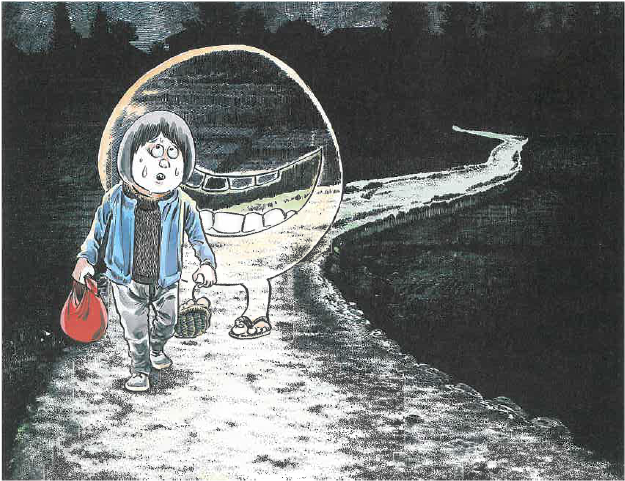
As a boy Mizuki Shigeru encountered the Hidarugami out for a walk in the woods. These spirits of those who died of hunger can cause the living to suffer the pains of starvation. A terrible, terrible ghost.

Mizuki’s encounter with the Hidarugami as a young boy is quite poignant, considering how hunger would become such a defining point for the entire nation of Japan in the decades to come.

4. Sazae Oni – The Turban Shell Demon

Mizuki_Shigeru_Sazae_Oni

The Sazae Oni only pops up briefly in Showa 1926-1939: A History of Japan, when Mizuki Shigeru’s mentor treats young Shigeru to his first taste of the sea snail sazae and warns him of the dangers of the Sazae Oni.

This shape-shifting Sazae Oni is one of the most bizarre in Japan’s yokai menagerie. I’m not sure who first saw this hard-shelled sea snail and imagined a seductive woman.

3. Kitsune no Yomeiri – The Fox Wedding

Mizuki_Shigeru_Kitsune_no_Yomeiri

The phenomenon that convinces a young Mizuki Shigeru that yokai are real. One night, his friend and mentor NonNonBa tells a young Shigeru about the foxes in the mountains and how they hold their marriage ceremonies.

When Shigeru hears the foxes in the mountains, he knows NonNonBa is telling the truth, and that yokai are real!

2. Betobeto San – The Footsteps Yokai

Mizuki Shigeru Betobeto San

One of the least dangerous monsters in Japanese folklore, Betobeto San is the sound of footsteps walking behind you late at night. One evening Mizuki Shigeru and his brother have an encounter with Betobeto San, and the wise NonNonBa tells them what to do.

1. Tenjoname – The Ceiling Licker

Tenjoname_Mizuki_Shigeru

Another yokai story from NonNonBa, who tells the young Mizuki Shigeru about the monstrous Tenjoname who comes in the dark of the night and … licks the ceiling. OK, so that’s not very scary, and other authors have had to improve on the legend of the Tenjoname over the years.

Garei – The Picture Ghost

Mizuki_Shigeru_Garei

To learn more about Japanese Ghosts, check out my book Yurei: The Japanese Ghost

Translated from Mizuki Shigeru’s Mujyara, Ochiguri Monogatari, and Other Sources

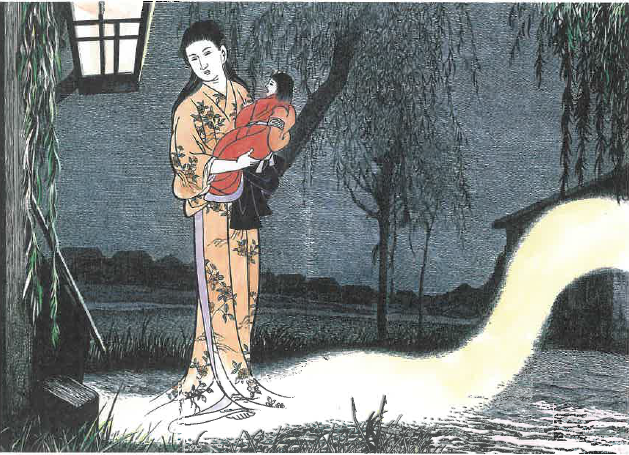
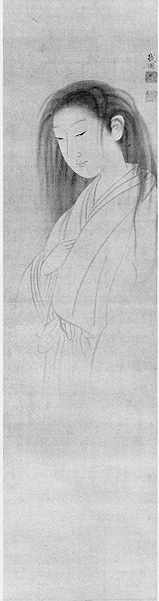
Long ago, there was a dilapidated folding screen with the portrait of a woman holding her child. The screen was the property of the Kanju-ji temple in Kyoto, where it was kept buried away in a storehouse. One day, a request came from a retainer of the samurai Honamiden to borrow the screen. Thinking it was nothing more than a worthless nuisance, the temple was only too happy to comply with the request. The priests sent Honamiden the screen with all due haste.

Even though the screen was old and neglected, the painting was beautiful and Honamiden proudly put it on display in his house. That very night, reports started coming in of a mysterious woman who appeared in the vicinity of Honamiden’s manor. She was beautiful, and was reported to be carrying a small child. The unknown woman appeared every single night and wandered the grounds of the manor. Finally, one of Honamiden’s servants followed the woman. He watched her as she entered the house, and gasped as she suddenly disappeared while standing in front of the ancient painting.

Upon hearing this, Honamiden returned the screen to Kanju-ji as quickly as possible, mentioning nothing of the mysterious woman or the incident. A beautiful picture was one thing, but he did not need to attract strange spirits.

Now, that same mysterious woman began to appear around the Kanju-ji temple. Suspecting the painting was the origin of this apparition, a clever servant placed a piece of paper over the head of the woman in the painting. Sure enough, that evening when the ghostly woman was seen her head was covered by a piece of paper.

Kanju-ji assembled some artists to investigate the painting, and they all agreed it was the work of the artist Tosa Mitsuoki—and an important work at that. Because Tosa was dead, there was no way of knowing the story behind the woman in the painting, but they all agreed that it was a shame that such a valuable painting was allowed to degenerate to such poor condition. Hearing that, Kanju-ji paid to have the screen restored to its former condition and properly displayed.

From that time onward, the mysterious woman never appeared again.

Translator’s Note:

Winding down on my Halloween yurei posts! Although the last two haven’t exactly been yurei, but spirits of a different sort …

This story comes from Fujiwara Ietaka’s Ochiguri Monogatari (落栗物語; Tales of Fallen Chestnuts), thought to be written sometime in the 1820s. Ietaka’s book is a loose collection of random bits and pieces, observations of daily life of the time and stories overheard. Obviously, the Garei falls into the latter category.

The connection between art and ghosts is an old one, going back at least to The Ghost of Oyuki and probably even further. The story of the Garei builds on the idea that certain works of art and craftsmanship are able to be infused with some of the soul of the artist and take on a life of their own. The story serves as a cautionary tale with a definite moral—treat works of art with respect, or they will come out and haunt you.

(Speaking of which, this can almost be seen as an inspiration to films like Ringu, with the ghost emerging from the painting instead of Sadako emerging from the TV. Of course, the Garei from this story wasn’t quite so vengeful as Sadako; she just wanted her picture to be appreciated and treated nicely. )

Yokai researcher Oda Kokki identifies the Garei as a type of Tsukumogami , a belief in Japan that household objects can gain life after 100 years. I’m not personally sure I agree with that, as the painting in this story is not yet 100 years old. And Tusumogami tend to be everyday objects that are handled and used daily, slowly gaining life as human’s infuse them will small pieces of their motive energy over the century. Garei-type stories tend to be more about the power of the artist, how certain artists attain such skill that they are able to infuse their works with souls. A similar story has an artist painting such realistic portraits of Hell that they become actual portals to the netherworlds. Sounds like an episode of Twilight Zone, doesn’t it?

Oh, and by the way: Mizuki Shigeru ends his retelling of the Garei with a further warning—you better be nice to his comic books or he will make sure that all of the monsters he puts in there will come out to get you!

Further Reading:

For more stories of yurei and art, check out:

The Ghost of Oyuki

Hokusai’s Manga Yurei

More Hokusai Manga Yurei

Yurei-zu: A Portrait of a Yurei

A Portrait of an Ubume

Tajima no Sorei – The Poltergeist of Tajima

Mizuki_Shigeru_Tajima_no_Sorei

Translated and Sourced from Mizuki Shigeru’s Mujyara, Taihei Hyakumonogatari, Japanese Wikipedia, and Other Sources

This is a tale of the Edo period, from Tajima province (modern day Hyogo prefecture).

A down-on-his luck ronin named Kido Gyobu wandered into Tajima one day. He had heard rumors that there was an obakeyashiki—a haunted house—in town that had lay abandoned and unoccupied for years. Kido was very proud of his courage, and vowed to stay at the house as a Test of Courage.

From outside the house was dilapidated and the garden was overgrown, but it was livable. Kido took his small belongings, which were just his traveling clothes, bedding, and the two swords that it was his right to wear, and went into the house where he would live. He wandered through, kicking up dust and disturbing cobwebs. The tatami-mat floors were old and bug-ridden. The paper in the windows torn and yellow. The cooking utensils rusting. But he found nothing to evoke the terror that was the reputation of the house. Kido put it down to rural superstition, and made a bed for himself in the main room. He spent his day without incident—cooked his food. Took his bath. Drank his sake and smoked his pipe. All which lead him to think that there was nothing to fear.

That night, when Kido had put out the candle and climbed into his futon, the house suddenly lurched and began to shake violently. All of Kido’s belongings were scattered about the room, and the entire house shook like it was in the grips of some monster. Kido assumed it must be a massive earthquake, but when he steadied himself enough to look out the window, he saw the rest of the village was as calm as a pool of still water. It was only inside the house that the world was being shaken to pieces.

With the coming of dawn, the house settled down and the shaking ended. Kido was not to be beaten so easily, and resolved to continue his stay in the house. The second night was identical to the first. The day passed without incident, but at night the house came to live and rattled Kido around like dice in a gambling cup.

Kido had enough of the house, and went to ask advice from a distant relation, a monk named Chisen, who lived in a temple in a nearby village. Chisen listened calmly to his story, and thought for a short while, and told Kido he would accompany him back to the house and stay the night with him.

The third night was a repeat of the first and second—a boring day and a lively night. With the house doing its best to dislodge Kido and Chisen or at least to smash them into something, Chisen sat calmly in the center of the main room as if meditating. He stared intently at the floor for hours as if searching for something, oblivious to the chaos around him. Suddenly, in one swift move Chisen drew Kido’s short sword—which he had tucked into his obi sash—and plunged it into a particular spot in the tatami-mat floor.

The instant Chisen plunged the stabbed into the floor, the house stopped shaking. Blood welled up from the spot Chinsen had stabbed, staining the tatami mats. But that was all. The house was silent. Leaving the sword standing upright in the floor, the exhausted Kido and Chisen settled down for some much needed sleep.

The next morning, they pulled out the knife and lifted up the tatami mat to see what Chisen had wounded. The found an odd memorial plague, reading “Eye-stabbing Sword Bear Memorial Tablet” (刃熊青眼霊位 ). Chisen’s had stabbed the sword directly into the kanji for “eye,” and that was where the blood was welling up from.

Leaving the house, the revealed this to the villagers who told them of an odd legend. Years ago, the man who lived in that house had killed a bear who wandered in from the forest one night. Fearing the wrath of the bear’s spirit, he had a memorial tablet created and a proper funeral given for the bear. But it was apparently in vain, for the bear’s spirit possessed the man and killed him, and had haunted the house ever since. Many strange things were seen in the house every night, and none had dared to stay there until Kido and Chisen.

Translator’s Note:

A definite twist to this Halloween yurei story, eh? I bet you didn’t see that ending coming! I certainly didn’t expect that when I started translating it.

This story originally comes from the Taihei Hyakumonogatari (太平百物語; 100 Stories of Peace and Tranquility). The Taihei Hyakumonogatari uses the title Tajimekuni no Yanari no Densho (但馬国の家鳴の伝承; Legend of the Crying House of Tajime), which Mizuki Shigeru changes to Tajime no Sorei (但馬の騒霊; The Poltergeist of Tajime).

Yanari is a term for a particular type of haunted house that shakes and groans without any visible cause. The kanji translates to家(house) + 鳴(cry), and Harry Potter fans would recognize the Shrieking Shack as a classic Yanari. There are Yanari legends from almost everywhere in Japan. They were popular during the Edo period, with newspapers reporting on local Yanari and particularly popular ones becoming flash tourist attractions as the curious tried desperately to glimpse actual supernatural phenomenon.

Most Edo period portrayals of Yanari show small oni and other yokai on the outside shaking the house. However, these yokai are completely invisible and only their effects can be seen.

Toriyama Sekien Yanari

Mizuki uses the term sorei, which uses the kanji 騒 (disruptive) +霊 (spirit). This is a rarely used term for poltergeist-style ghosts that rattle the doors and shake walls just like Western poltergeists. Thanks to the movie series, the term sorei has almost disappeared and most people just use the term “poltergeist” (ポルターガイスト) in modern Japanese.

And yes, to the unanswered question–the story ends there. It never goes on to say if Kido and Chisen were successful in banishing the spirit, or if stabbing the memorial tablet did the trick.  That part of the story is the most bizarre, as it runs counter to all other Japanese ghost stories.  Most ghosts WANT memorials and funerals and to be worshiped. This is the only one I know of where destroying the tablet ends the haunting.

All I can think of is this–that the bear spirit was not Buddhist, and resented the Buddhist memorial tablet and funeral. This makes sense in a way if you think of animal spirits as being more of the Shinto tradition than the Buddhist.  And after all, the haunting and hubbub didn’t happen until AFTER the funeral, soooo ….

Further Reading:

For more Japanese ghost and spirit animal stories, check out:

Onikuma – Demon Bear

Kimodameshi – The Test of Courage

The Cursed Mansion of Yoshioka Gondayu

The Long-tongued Old Woman

Yokai of the House

Previous Older Entries Next Newer Entries

Copyright notification

All translations and other writing on this website were created by Zack Davisson and are copyright to him.

Copyright notification

In accessing these web pages, you agree that any downloading of content is for personal, non-commercial reference only.

No part of this web site may be reproduced or transmitted in any form or by any means, electronic, mechanical, photocopying, recording or otherwise, without prior permission of Zack Davisson.

Copyright notification

For rights clearance please contact Zack at:

zack.davisson (at) gmail.com

Thank you.