
To learn much more about Japanese Ghosts, check out my book Yurei: The Japanese Ghost
A question I am commonly asked is, “What is the Japanese word for ghost?” However, what seems a simple question is actually complicated.
Ghost. Spirit. Specter. Wraith. Revenant. Several words in the English language describe souls of the dead who have not moved on to the afterlife. Many of these come from other languages; like ghost, which has its probable roots in the pre-Germanic word ghoizdoz, meaning fury or anger; or spirit from the Latin spiritus meaning breath. Then there are more direct loan words, such as the Dutch spōk (spook), or the French phantom, or the Scottish wraith. Each word can mean “ghost,” but each word carries a different nuance or flavor.
Some words are even more specific. Poltergeist combines the German words poltern meaning to rumble or to make noise and geist meaning spirit or ghost. Put the two words together and you have a very specific entity that cannot be mistaken for some other type of ghost. A poltergeist is only ever a poltergeist.
A country as obsessed with ghosts as Japan is obviously going to have more than a single word. Just as in English, there are several words meaning “ghost,” but each with a different usage and feel.
All(most) all Japanese words for ghost use some variation on the kanji 霊. 霊 can be read as either –rei or –ryō (or tama, or mitama, or –ki — no one ever said Japanese was easy). Whatever the pronunciation, 霊 always retains the rough meaning of spirit.
Here is a list and definition of all the Japanese words for ghost that I know. I am sure the list must be incomplete:
___________________________________
幽霊 – yūrei – 幽 (dim) +霊 (spirit) – Probably the most common Japanese word for ghost, yūrei translates pretty happily as dim
spirit. This seems like an obvious explanation – ghosts are see-through, after all – but the word has a further connection. One of the words of the land of the dead in Japanese is 霊の世界 Yū no Seikai – The Dim Land.
亡霊 – bōrei – 亡 (departed) +霊 (spirit) – Bōrei is the Gothic term for ghost in Japanese, meaning ruined or departed spirit. This is the word with the most literary overtones. Probably the best example is Japanese translations of Shakespeare where the ghost of Hamlet’s father is called Hamlet no Bōrei.
心霊 – shinrei – 心 (heart) +霊 (spirit) – Shinrei is the term preferred by spiritualists in Japan, and carries a more mystical feel.
精霊 – seirei/shōryō – 精 (vitality) +霊 (spirit) – This combination of kanji has religious connotations. When pronounced, seirei, it is most likely talking about Western ghosts. When pronounced shōryō it has Buddhist connotations.
聖霊 – seirei – 聖 (holy) +霊 (spirit) – The same pronunciation as seirei above, but changing the kanji makes the word for the Holy Ghost of Christianity.
死霊 – shiryō – 死 (dead) +霊 (spirit) – Because it has the kanji for “death” right there in the front, shiryō is a little bit scarier term for a ghost in Japanese.
生霊 – ikiryō – 生 (living) +霊 (spirit) – Ikiryō is a specific term for a person who releases their ghost-energy while still alive. It is a rare manifestation, seen mainly in The Tale of Genji.
怨霊 – onryō – 怨 (grudge) +霊 (spirit) – A popular figure in J-Horror flicks, onryō are ghosts who died with some lingering grudge, and seek revenge against those who wronged them.
騒霊 –sōrei – 騒 (disruptive) +霊 (spirit) – This is a rarely-used term for poltergeist, meaning ghosts who just rattle the chandeliers and move chairs around. In modern Japan, most people would just use the loan-word poltergeist.
祖霊 – sorei – 祖 (ancestor) +霊 (spirit) – Similar pronunciation as above, but with a long vowel and and a drastically different kanji. Sorei are ancestor spirits who protect the living, and are deeply honored.
神霊 – shinrei – 神 (shrine) +霊 (spirit) – Another rarely used term, this refers to the spirits of Shinto shrines.
悪霊 – akuryō – 悪 (bad) +霊 (spirit) – This is a somewhat loaded term that mean’s simply “bad spirit.” It carries a more Western feel to it, and could be applied to devils as well as ghosts. Definitely bad news.
浮かばれない霊 – Ukabarenairei- 浮かばれない(cannot rest in peace) + 霊 (spirit). Essentially, the Restless Dead. Often used for those who died in isolated places, like mountains, whose bodies were not properly cared for.
英霊 – eirei – 英 (heroic) +霊 (spirit) – Spirits of the war dead/heroes.
幽鬼 – yuki – 幽 (dim) + 鬼 (ki) – Demon spirit. A seldom-used term for evil ghosts.
亡者 – mojya – 亡 (dead) + 者 (person) – Dead person. An older, seldom-used term for ghosts.
お化け/化け物 – obake/bakemono お化け (changing) + 物 (thing) – The terms refer not specifically to yūrei but translate in usage to something closer to supernatural creature. Obake and bakemono use the kanji 化 (bakeru) which carries the meaning of to adopt a disguise or change form, with the implication of changing for the worse.
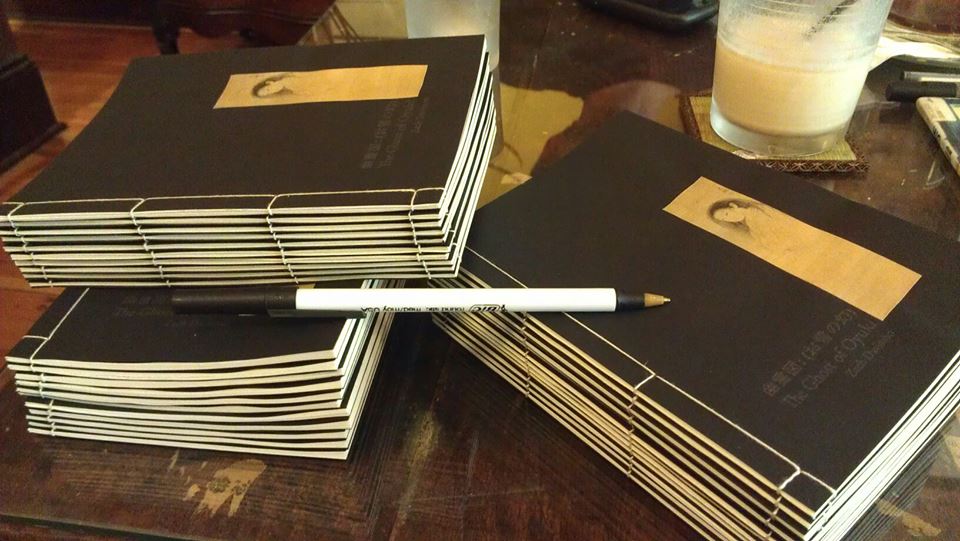
The Ghost of Oyuki
For more about the origins of Japanese Ghosts, you can purchase Zack Davisson’s limited edition yomihon chapbook The Ghost of Oyuki from Chin Music Press.
Further Reading:
Check out other yurei tales from hyakumonogatari.com:
What Does Yokai Mean in English?
What is the Triangle Headband Japanese Ghosts Wear?
Goryo Shinko – The Religion of Ghosts
 百物語怪談会 Hyakumonogatari Kaidankai
Jul 19, 2011 @ 17:17:08
Thanks for posting this! I was always curious about other words for 幽霊 and what the difference between 幽霊 and 化け物 was.
Jul 22, 2011 @ 09:12:40
Thanks! I am glad you found it helpful! The confusion between obake and yurei is lcomplicated and ong-standing. Some of the heaviest hitters of Japanese folklore have jumped into the conversation.
Kunio Yanagita, one of Japan’s earliest and foremost folklorists, made a clear distinction between yūrei and obake in his seminal “Yokaidangi (Lectures on Monsters).” He claimed that yūrei haunt a particular person, while obake haunt a particular place. Mizuki Shigeru says that anything that somehow change from one form to another is an obake. So he would say something like a yūrei is an obake, because it changed from a living person to a dead person, while a kappa is not, because it was always a kappa and didn’t change shape.
In general Japanese usage though, obake has no real distinction and all supernatural creatures are called obake. When someone is startled or senses something strange, they usually say “Obake!” rather than “Yūrei!”
Sep 21, 2011 @ 00:15:57
Would it be possible to compose a list of Japanese ‘ghost types’ such as ubume, hone yurei, funa yurei, goryo, etc.? While your above list of different ghost words are interesting, I’m concerned with the varying types of ghosts and their unique forms and purposes. I am interested in the varieties available from folklore, especially those that I am unfamiliar with.
Sep 22, 2011 @ 16:08:14
That is a good suggestion! I will get working on that.
Apr 10, 2013 @ 23:35:07
I’m researching about the true nature of Yokai, for my story and I stumbled upon this very reliable source. Thank You Very Much!!! Your awesome Zack Davisson.
Apr 10, 2013 @ 23:49:43
I was researching about the true nature of Yokai in the internet and I stumbled upon this very reliable source. It helped me a lot, I really love Japanese Folklore. I have one suggestion though would you please have some illustrations for each of the Yokai for me to be able to describe them easily on my story (physical image).
And I really want to know their unique forms and abilities or purposes.
Thank You Very Much!!! Your awesome Zack Davisson.
Apr 11, 2013 @ 15:34:28
Thank you! Glad you found my site! All of these ghosts would pretty much look the same. They are just different names for the same thing. And as to adding illustrations of yokai–well, there are thousands of them! I add as many as I can, but am limited by time.
If you want to know more about yokai, check out my post “A Brief History of Yokai.” That is a great introduction to what yokai are and their true nature.
Apr 12, 2013 @ 20:21:10
i didn’t expect that u will reply on my comment…thanks!. By the way i forgot to introduce myself, call me “Momotaro” a weird name but i like it. It means Peach Boy isn’t it..:)
oh and thanks for your ” A Brief History of Yokai”…such a big help just one more thing can you feature KITSUNE.. next ..i’m really really fascinated with those creatures and i want to add them in my story but i can’t get enough reliable informations about them.
Apr 13, 2013 @ 13:08:20
I always try to replay to comments if I can. And yes, Momotaro means “Peach Boy.” It’s a famous Japanese folktale.
I probably won’t do kitsune anytime soon … some yokai are just to “big” to do proper justice to them in a blog like mine. Kappa, tengu, tanuki, kitsune … there is enough folklore around them to write books instead of blog articles. When I feature those, it is usually around some specific story or slice of folklore.
Apr 13, 2013 @ 21:08:12
But, can you please give me a very brief information,if you will be able to reply on this comment please please,,(i’m doing dogeza right now),sorry for being persistent..
And is their any Folk stories that you know about the existence of a Hanyo?If I’m not mistaken they are half human and half yokai, can you please share it to your blog…thanks!!
I really understand why you can’t feature kitsunes yet on your blog. 🙂
Apr 14, 2013 @ 14:52:54
There aren’t any folk stories or traditions about hanyo, because the word and concept was invented by Takahashi Rumiko for her comic book InuYasha. Takahashi uses folklore in her comics, but she isn’t authentic with it–she makes up whatever she needs to tell the story she wants to tell.
Jun 20, 2013 @ 08:11:52
Thank you for posting this. Google translate told me that ghost was gosuto. I had no idea how complicated it actually was.
Jun 20, 2013 @ 10:49:14
Google translate is not very useful, I’m afraid … although the katakana form ゴースト is yet another word that is used, mostly to differentiate Western ghosts from Japanese yurei.
Jun 22, 2013 @ 09:27:58
brother zack,
great blog, sir. i’m trying to come up with titles or phrases and perhaps you can help. i’m looking at something along the lines of “spirit group/corp”. i know the
term “gumi” ie shinsengumi, but can i simply add this to say one of the terms
as discribed in your post here? ie ‘soreigumi’? i imagine it’s not as simple as that,
but if there’s a specific rule(s) that’ll clue me in to forming phrases, i’d be grateful.
Jun 28, 2013 @ 10:42:41
It all depends on the context. What are you trying to say, and for what reason?
-gumi works fine. It generally means “A group of … .” and is used from everything from a military context to separating students by homeroom. Sorei, however, refers specifically to the conglomerate group of ancestor spirits. So soreigumi doesn’t make much sense.
I need more info for the use of the term, and what context, before I can help.
Jun 28, 2013 @ 13:41:11
hi zack-san, i appreciate you getting back to me. i’m very envious of your knowledge of the japanese language as well as your interest in japan’s folklore. so very cool. yes, context is key. it’s so hard to say as i enjoy coming up with titles and such. names for artistic projects, perhaps composition (song) titles, etc. -fictional or not, just being able to have it make sense and not be technically “incorrect”. that said, slang goes as long as it too isnt somehow wrong to say. i guess i’m looking for something along the lines of “ghost group”, “spirit group”, etc. perhaps you may have suggestions? that said, i really like the ‘gumi’ “suffix” -ha. thanks again for your time. greg-san
________________________________
Oct 14, 2013 @ 06:25:37
A strange question, but what word would be used to describe the ‘ghosts’ in Pacman? Is only モンスター used, meaning monsters?
Oct 14, 2013 @ 11:28:43
Ha! I had to look this one up! Yep, the only term used in Japanese is モンスター (monster). They are only called “ghosts” in English. I didn’t realize they all had their only individual names and attack patterns either … just shows I am not much of a video gamer!
Oct 14, 2013 @ 15:32:36
Thank you Zack, Bonus points to you!
Oct 19, 2013 @ 19:50:56
Hi, Zack. Great blog! Thinking about the anime title, “Yu Yu Hakusho” (Ghost Files), I always assumed that “Yu Yu” was the word for ghost, because it just sounded like a word used to scare children. But I could never find the actual definition anywhere. After reading your blog, I’m guessing that ““Yū Yū” is indeed a form of the word, “Yūrei,” in “kid talk.” Am I right? Thanks.
Oct 20, 2013 @ 13:40:28
Kind of … but not really. “Yu Yu” was made up by Yusuke Honma when he created his comic. It puts together two kanji 幽 (Yu; ghost) + 遊 (Yu; play) to mean something like “Ghost Play” or “Messing around with ghosts.” But it isn’t a real word. Just the title of the comic.
Oct 20, 2013 @ 23:22:40
I’m confused. You previously said 幽霊 – yūrei – 幽 (dim) +霊 (spirit) , which would make yu = (dim) and rei = (spirit), consistent with all the other [something]rei. But the way you put it, yu yu would = (dim dim). So can a “dim ghost” be called a “dim dim” ? Thanks again!
Oct 20, 2013 @ 23:38:58
I can understand why it is confusing. That’s what makes Japanese so difficult. A kanji can have multiple pronunciations, with multiple meanings.
So yes, while 幽 means “dim” (as in yurei) it also has the connotation of “ghostly.” It can also mean “to confine,” and “dark.” Like I said, the kanji used for Yuyu is 幽遊. Honma is purposefully taking the first kanji for yurei 幽 and combining it with 遊 to make the title. The second kanji, 遊, can also be pronounced asobu, and can carry the nuance of freedom of movement, lack of responsibility, and so on.
Your also dealing with a fiction writer. So Yuyu has no real meaning. It isn’t an actual word. It never exists in Japanese outside of the context of that comic, any more than the made up words in Harry Potter or Lord of the Rings. Just something the artist thought sounded cool, and so used it for his title.
That happens quite often in comics where they will just string come kanji together for the visual impact or because it is cool. But you shouldn’t look for any deeper meaning than that. “Yuyu” is absolutely not a word used in Japanese to refer to ghosts of any kind.
Aug 16, 2015 @ 05:02:09
Marvelous, what a blog it is! This web site provides
useful facts to us, keep it up.