About Me

Zack Davisson is an award winning translator, writer, and scholar of Japanese folklore and ghosts. He is the author of Yurei: The Japanese Ghost


Biography
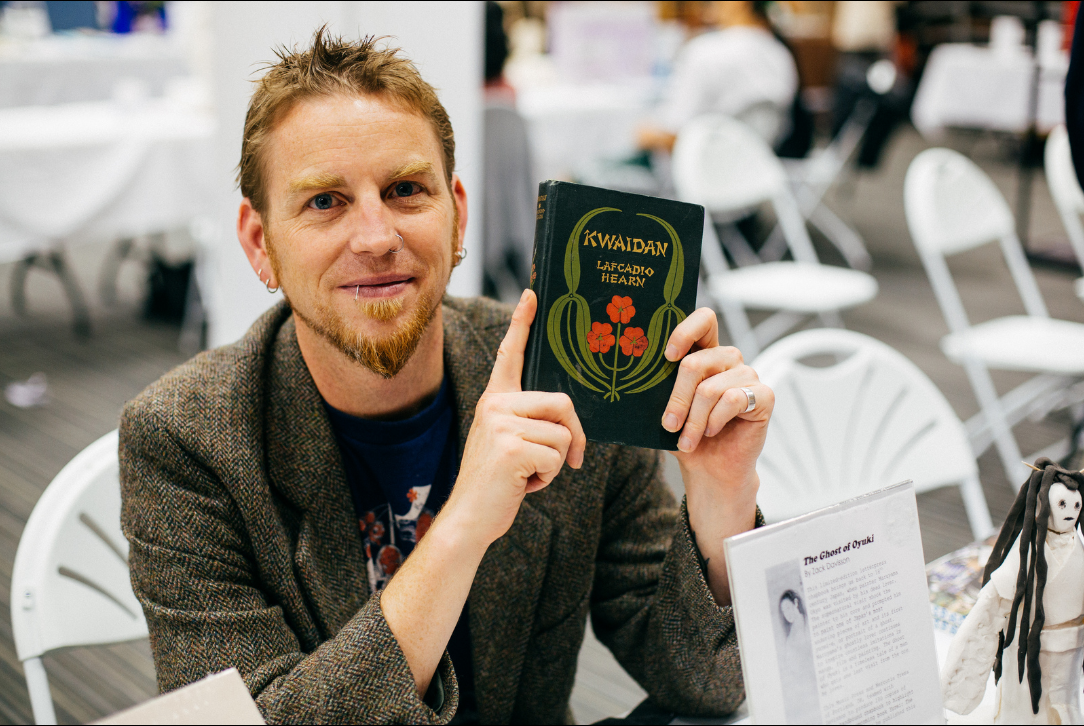
Zack was born on August 15th, a date that didn’t have much other significance until he lived in Japan and discovered that he shared the day with Obon, the annual Japanese Festival of the Dead. Every year on his birthday the country transformed into a spectacle of lanterns and tradition, as all work was put aside to welcome the millions of ancestor spirits who made the trip back from anoyo to the welcoming arms of their living families, where they were fed and honored.
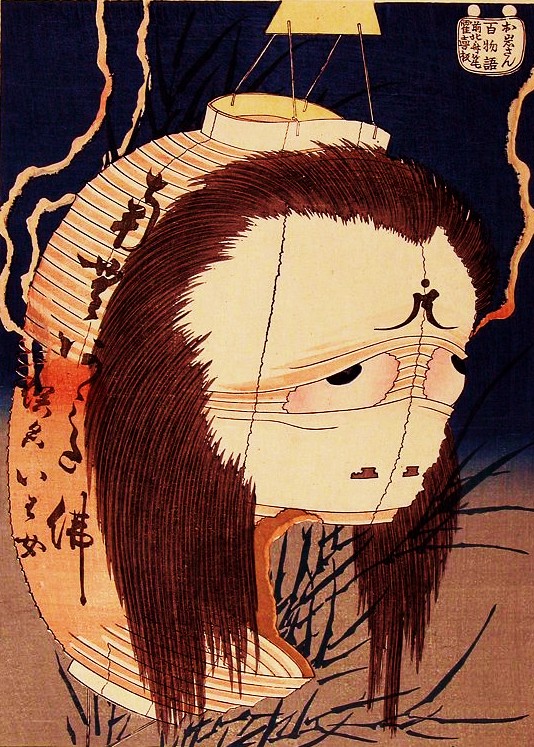
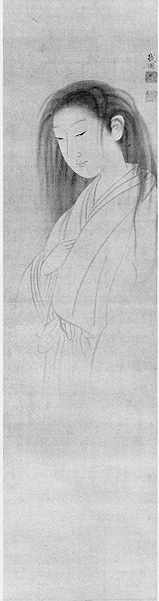
With an undergraduate degree in Fine Art from Cornish College of the Arts, Zack was aware of Japan’s tradition of ghost imagery and saw a connection between the Edo period figures and the modern j-horror image of Japanese ghosts. Pursuing his Master’s Degree with the University of Sheffield in Japanese studies, Zack delved deeper into the subject and learned to put a name to the mysterious white-robed figure; a yūrei.
Writing his Master’s thesis on yūrei, Zack took this new knowledge and published articles on yūrei and other folklore topics in nationally circulated magazines such as Japanzine and Kansai Time-Out. Other freelance writing work included writing for the Osaka City Guide and working as a consultant for Osaka University where he created articles for student use, worked as a translator and contributed to textbooks.
Retuning from Japan after seven years, Zack now lives in Seattle, WA with his wife Miyuki.
Works

- Yurei: The Japanese Ghost
- The Ghost of Oyuki (Sold Out) (Chin Music Press)
- The Secret Biwa Music that Caused the Yurei to Lament (Chin Music Press)
- Kitaro
(Drawn & Quarterly)
- Showa 1926-1939: A History of Japan
(Drawn & Quarterly)
- Showa 1939-1944: A History of Japan
(Drawn & Quarterly)
- Showa 1944-1953: A History of Japan
(Drawn & Quarterly)
- Showa 1953-1989: A History of Japan
(Drawn & Quarterly)
- Drawn & Quarterly: Twenty-five Years of Contemporary Cartooning, Comics, and Graphic Novels
- Shigeru Mizuki’s Hitler
(Upcoming) (Drawn & Quarterly)
- Satoshi Kon: Opus
(Dark Horse Comics)
- Seraphim: 266613336 Wings
(Dark Horse Comics)
- Art of Satoshi Kon
(Dark Horse Comics)
- Panty & Stocking with Garterbelt
(Dark Horse Comics)
- Wayward Volume 1: String Theory
(Image Comics)
- Wayward Deluxe Volume 1

TV Appearances

Interviews
- JAPANESE GHOSTS!! Everything You Want to Know Explained by Zack Davisson
- Warlock Asylum Interviews Legendary Scholar &Translator of Japanese Folklore- Zack Davisson
- Phantom of the Typewriter: Zack Davisson
- The Japan Times: Hyakumonogatari Kaidankai: Tales of the Weird and the Strange
- Shigeru Mizuki’s Showa: An Interview with Zack Davisson
- JQ Magazine: JQ&A with Manga Translator Zack Davisson on Shigeru Mizuki
- On Living with a Japanese Ghost (NPR)
Articles
Some of Zack’s articles:
- Confessions of a Manga Translator
- Yurei: The Ghosts of Japan
- The History of Hausu
- Jellyfish Eyes and Japan’s Monster Culture
- The Suicide Woods of Mt. Fuji
- Tales of Ghostly Japan
- J-Horror: An Alternate Guide
- Ge ge ge no Kitaro: Poor Little Ghost Boy
Zack also traveled through Egypt during the 2011 Revolution. You can see his travel blog at:
Facebook and Twitter
Like Hyakumonogatari Kaidankai on Facebook for more updates and posts
Follow Zack Davisson on Twitter, where he also translates Mizuki Shigeru’s Twitter posts:
Conventions, Media Contact, and Consultant Information
To contact Zack Davisson: zack.davisson@gmail.com
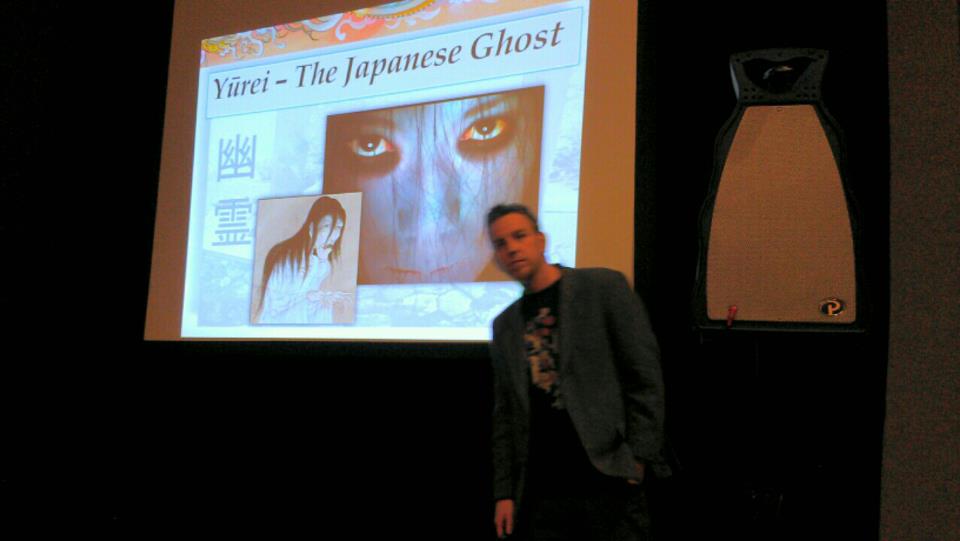
Zack Davisson is interested in sharing his passion and knowledge of Japanese kaidan and folklore. He has worked as a consultant and contributor on projects ranging from television series, role playing games, and comic books to college courses and museum exhibitions. He is a trained public speaker who leads panels on yurei, yokai, Mizuki Shigeru, and other Japanese folklore.
He recently consulted on the Japanese film series for the Henry Art Museum, contributed a piece on Mizuki Shigeru and Yokai to an exhibition for the Wereldmuseum Rotterdam and gave panels on Japanese ghosts and Shigeru Mizuki at SakuraCon, KuronekoCon, and Anime USA. His funa yurei translation was performed as a puppet play for Drexel University, and other translations have been used in graduate programs for Central Michigan University and University of Maryland and he consulted for the São Paulo State University in Brazil on a lecture comparing Japanese and Brazilian ghosts.
Current projects included being a yokai advisor for the video game Kodama, advising Tony Harris on his upcoming comic Roundeye: For Love , and a consultant for Brandon Seiffert on his comic Supernatural Geographic, both from Image Comics.
If you have a project that you think he might be interested in or questions about Japanese ghosts and monsters, please send him an email!
What’s that Yokai?
If you have a yokai or Japanese ghost story you would like identified, Zack is happy to help if he can. Many of the best hyakumonogatari.com posts come from reader questions.
Send your question to Zack Davisson: zack.davisson@gmail.com
Or stop by Obake Forums and post your question.
 百物語怪談会 Hyakumonogatari Kaidankai
Sep 29, 2010 @ 23:40:29
BTW, お盆 is on 8/15 only in certain areas.
I know that from being an 8/15 birthday myself, too.(笑)
Sep 30, 2010 @ 00:02:16
Is your birthday August 15th as well! Wow!
And yes, I know that the date of Obon changes depending on where you lived. I lived in Nara, which has a beautiful candle festival on the 15th to celebrate Obon.
Oct 03, 2010 @ 15:59:03
Yep, but in my case, the first reaction was a… poor one so after that my birthday was anywhere from Aug 05-10. Just NOT 8/15 – the day the Japanese were forced to surrender to the Americans in WW2.
o.o
Aug 10, 2011 @ 03:32:49
Fantastic website! I totally enjoyed reading the stories you translated!
I have been very very curious about the meaning behind the symbolism present in the cursed video in The Ring. I do hope you will be able to enlighten me!
Aug 11, 2011 @ 11:04:04
Thank you! Glad you enjoy my website!
The cursed video in the Ring doesn’t have much symbolism related to Japanese folklore, actually. Most of the imagery is Ring-specific, dealing with scenes from Sadako’s life, her mother, and Ryuji Takayama. The part where there is a lot of Japanese language floating around is a newspaper article where Sadako’s mother, Shizuko Yamamura, predicted the eruption of Mount Mihara. The scene with the people crawling on the ground is, I believe, people dying in that eruption.
Sadako herself is an amalgam of folklore and real life. The ghost rising from the well comes from the legend of Bancho Sarayashiki and the ghost of Okiku, and Sadako’s face, especially the droopy eye, comes from Yotsuya Kaidan and the ghost of Oiwa. In real life, she is based off of a psychic named Sadako Takahashi, who was said to be able to project images onto undeveloped film.
Oct 30, 2013 @ 21:12:21
That’s great! I’ve heard conflicting stories surrounding Sadako Sasaki as well. Which was uber sad to consider. I’m glad to hear this version.
Oct 31, 2013 @ 14:04:22
Definitely no relation to Sadako Sasaki, the girl from Hiroshima who folded 1,000 cranes! They just happen to share the same name. That would be like connecting “Jason” from “Friday the 13th” to … any other person named Jason, really. Anyone making a connection there really doesn’t know what they are talking about.
Sep 01, 2011 @ 09:39:53
WOW OMG THANKS FOR THE INFORMATION!!!
Sep 01, 2011 @ 10:04:11
Happy to help!
Sep 12, 2011 @ 15:00:10
Thanks for translating and sharing these fantastic stories with us Zack 🙂
Sep 12, 2011 @ 15:27:01
Thanks for reading Ana!
Sep 27, 2011 @ 12:45:18
Hi,
Just came across your site by chance.
I grew up in Japan (in the ’60s) and always loved the kaidan I came across as I meandered around the country. It’s great to see your scholarly love of the creatures I searched for in bamboo groves and hatake as a kid.
The stories I collected and retold still inspire my sumi-e hobby; Finding your site has certainly been the highlight of my week!
Thanks!
Sep 27, 2011 @ 13:55:28
Glad you found the site! I fell in love with kaidan in Japan myself. Just walking around town I saw strange monsters everywhere. Or when talking to someone about an old shrine or temple, there was always an old story that could be told. I wanted to know more about it, so that is how my studies began.
Oct 08, 2011 @ 06:53:13
Dear Zack. Wonderful job on your web site. I’ve been researching TANUKI, and came across your translations, which you mention are from the Edo no Kimyo no Hyakumonogatari 江戸の奇妙の百物語. Strangely, I can find no reference to this work anywhere, in Japanese or in English. Could you kindly let me know the official name and publish date of the document? By the way, I myself am an old Tanuki, and in my spare time write the A-to-Z Photo Dictionary of Japanese Buddhist Statuary……….I’m planning on introducing your translations, but I first wanna find the document you refer to……thanks……..mark
Oct 08, 2011 @ 14:34:44
Hey Mark,
I have to say, you just made my day. Your website was a HUGE influence on me when I first started researching Japanese folklore. I first started writing about this doing a column for a local JET newsletter, and onmarkproductions was a well I dipped into many, many times for information. I hope someday my little website hear can be 1/100th as cool as yours is!
So, gushing fan aside, the reason you couldn’t find the book is that I got the name wrong, I am embarassed to say! I was going by memory on the title, and my memory was apparently a bit faulty. I just pulled it off of my shelf, and the title is Edo Tokyo Kaii Hyakumonogatari “江戸東京怪異百物語.” It is a book I picked up in a bookstore in Osaka. They had a whole series, and I regret not picking up the others. Not that I have the corrected title I will have to go back and edit those old postings!
I would be honored if you included my translations on your site!
Thanks again for the comment!
Oct 09, 2011 @ 02:25:23
Hey Again Zack-sama
I’ve not published my story on Tanuki yet, but have added the following two references:
1. Davisson, Zack. Translated Japanese Ghost Stories and Tales of the Weird and the Strange. His web site, Hyakumonogatari, includes various Tanuki stories translated from the Zusetsu Edo Tōkyō Kaii Hyaku Monogatari 図説江戸東京怪異百物語 (see entry in Primary Sources).
2. Zusetsu Edo Tōkyō Kaii Hyaku Monogatari 図説江戸東京怪異百物語 (100 Strange Tales of Edo Tokyo), an illustrated Japanese text by Kōichi Yumoto 湯本豪一; published 2007 by Kawade Shobō Shinsha 河出書房新社 (Tokyo). A collection of Edo-era tales and Meiji-era newspaper stories about strange and mysterious happenings. For English translations of five Tanuki tales from this work, see Zack Davisson’s Hyakumonogatari.
Not sure if I will include any “full” translation from your site, but I will probably include small bits — as always, you will by cited.
sincerely
mark
PS. thank you for the kind and encouraging words about my site.
Feb 01, 2012 @ 13:26:11
Hi Zack! I have been reading the amazing stories for awhile now and I love it! I love how you detail and translate the stories.i too love ghost stories and Japanese ghost stories are just amazing to say the least! They are original.the paintings are beautiful.this is my favorite site.im learning the words on ghosts.please keep up the great work!
Feb 03, 2012 @ 13:39:55
Thanks Rina! I am glad that you are enjoying the site! Encouragement like that really keeps me going.
Feb 05, 2012 @ 17:54:52
Thank you for creating this wonderful, informative blog! I’ve been following you for a little while now and really enjoy your posts, and have recommended you to my readers over at my kimono/Japanese traditions blog. 🙂 Keep up the good work and thanks again!
Feb 17, 2012 @ 10:46:57
Hi Zack,
Great site! I have recently become very interested in traditional Japanese ghost stories and would really like to compose a piece of music based on one for university. Do you have any stories about the Umibozu? I find them very interesting, but so far haven’t found much info on the web…
Thanks
Stuart
Feb 18, 2012 @ 14:13:24
Hi Stuart! Welcome to hyakumonogatari! I am sure I have some umibozu stories in my books somewhere. I can go look for something to translate for you.
Feb 19, 2012 @ 09:58:10
Hi Zack,
That would be brilliant if you could! It seem to be very hard to find information on them. I got from wikipedia that they are said the be drowned monks, but there must be a story behind that! Any translations would be very welcome.
Thanks
Stuart
Feb 21, 2012 @ 21:13:15
Woof! There was a lot more about umi bozu than I had thought! That was an interesting project to research. Hope you enjoy it!
Apr 22, 2012 @ 21:24:45
Zack,
Thank goodness i found this site! I’ve been scouring the internet for information describing some of the creatures i had found depicted in “Gazu Hyakki Yagyō”. Behold I have found a plethora of just that. PLEASE keep up the good work, you are certainly bookmarked on my computer!
Apr 23, 2012 @ 22:43:26
Thanks! I am glad you found hyakumonogatari! If there is any specific creature you want to know about, just ask!
May 05, 2012 @ 09:16:33
Dear Zack,
I just want to thank you for your AWESOME site! I’m doing a short essay for my Japanese Art class focused on Yōkai depicted in Ukiyo-e, and so I came across this great site.
Keep up the good work! 🙂
May 05, 2012 @ 10:26:45
Thanks! Glad my site was usefull for you!
Jun 15, 2012 @ 10:52:29
Your site is wonderful, any plans of translating tales by Izumi Kyoka ? I have read what is currently translated and hope someone as capable as yourself is planning more.The story “Sea Demons” in the 2nd vol. of Kaiki
was a treat, I agree with your review posted on Amazon. The 3rd vol. of Kaiki is printing and the publisher is hoping for a release end of June.
Thank You!
Jun 18, 2012 @ 11:04:20
Thanks Lore! I also love Izumi Kyoka, and would love to translate some of his works. I don’t have any plans for that currently, as I am engaged on a long-term translation project, and Kyoka takes a certain amount of dedication. But should the opportunity arise, I would be there!
Aug 17, 2012 @ 04:01:12
Hi Rick,
Many thanks for developing this website – your love for Japanese legend certainly shines through! I came across the site while researching a detail for one of my stories – and very usefully, your postings on kodama give an extra dimension to the “Sotouba Komachi”, which also informs part of my story. (I will of course credit your site as and when the book that includes this story is published)
Do you also make translations from English to Japanese?
Thanks again for the site – I will certainly bookmark it!
Aug 18, 2012 @ 12:51:40
I can do translations from English to Japanese, but not nearly as fluently. I need a native speaker to check them over for akward phrases and such …
And let me know when you story is published! I would love to read it.
Oct 21, 2012 @ 12:14:55
Thanks for your kind comments on my own website. I enjoyed yours as well. Looking forward to seeing what you think of the rest of my series.
Oct 21, 2012 @ 12:20:41
Thank you! MJ Steel has a cool site with Scottish ghosts, and he is doing a Japanese ghost series now as well. Check it out!
Dec 03, 2012 @ 06:33:35
Hello Zack, I’m montecristo73, owner of montecristo73returns, a channel on youtube that deals with Japanese ghost stories videos that I have entirely translated myself. I was led here by one of the viewers and really liked the page, so I thought of saying hi!
Jan 08, 2013 @ 12:26:46
Hello Zach, thank you so much for this website, it has helped me a lot. I was wondering if you could do Kuchisake onna? It is very well known but I can’t find a reliable source for the original story or the artwork from the Edo period. Thank you!
Jan 08, 2013 @ 12:51:54
Hey Maria!
The reason you can’t find any stories or artwork of the Kuchisake onna from the Edo period is because it didn’t exist then. Kuchisake onna is a modern yokai–what we would now call an Urban Legend. The first reports of her are generally accepted to be from 1979. There have been some attempts to link her to older yokai, but they are all pretty much just made up.
She wasn’t even considered a yokai until Mizuki Shigeru added her to one of his yokai compendiums, and then she was accepted into the official yokai pantheon.
Jan 08, 2013 @ 17:55:58
About Kuchi-sake-onna. In “Pandemonium and Parade: Japanese Monsters and the Culture of Yōkai,” author Michael Dylan Foster explores the history of Kuchi-sake-onna on pages 182 to 203. I highly recommend this book.
Jan 08, 2013 @ 18:56:47
I second Mark’s recommendation. An excellent book, although highly academic.
Jan 09, 2013 @ 08:52:00
Is yuki onna on your list of articles?
Jan 13, 2013 @ 23:40:35
Oh yes, definitely. I love the Yuki Onna. My wife’s name is Miyuki, which means Beautiful Snow, so I always tell her that she is a Yuki Onna in disquise.
Jan 28, 2013 @ 13:38:24
One of my favorite myths as well! I like the name Miyuki, I think Yukiko is a cute name too. 🙂
Jan 19, 2013 @ 09:44:23
Dear Zack, your website had been an interesting and educational read. I like it very much and appreciate the time & effort you have invested in this site. I look forward to reading more and will visit on a regular basis. It’s nice seeing tradition and old folk-tales being preserved and made more accessible to others. 🙂
Jan 21, 2013 @ 00:02:24
Thanks! I do my best! I just wish I had time to do more.
Apr 05, 2013 @ 11:07:30
I have seen that Miyuki can also mean ‘deep snow’.
It is a very beautiful name.
Apr 13, 2013 @ 13:15:19
The meaning of names all depend on the kanji used. You can have names that sound 100% identical, but have different meaning. That’s why when Japanese people introduce themselves they are often asked what kanji they use in their name. Just the sound doesn’t give you too many clues.
Apr 05, 2013 @ 12:01:36
Excellent blog. Not familiar enough with Japanese yet to make my own translations, so this greatly helps!
Are there any ghost specifically linked with the Island of Okinawa? My penpal was born there and I’d love to know something that might creep him out a tad. 😀
Apr 13, 2013 @ 13:14:05
Okinawa has a huge tradition of ghosts and folklore. It’s actually pretty unique–because Okinawa was it’s own country for most of history, it developed its own ghost and folklore unique from the rest of Japan.
Okinawa also has quite a few WWII-specific ghost stories, like the Suicide Cliffs and the haunted Kadena air force base. Those are interesting in that they are mainly reported by American military personnel and so follow the Western view of ghosts more than the Japanese.
Oct 06, 2013 @ 23:35:55
Hi, Zack
wow, your amazing website has to be seen to be believed. Please keep it up! I could easily spend hours here.
Now here’s a folklore query for you. On one of my trips to Japan, I visited the National Museum of Japanese History in Sakura, Chiba, a really neat museum full of terrific exhibits. I went to the hall where statues and images from folklore are displayed. There, I saw a tall, rotund human-like image apparently made of straw that very much reminded me of the old Michelin Man mascot or symbol. I didn’t take notes that day or pay much attention to the kanji. (Would it be a type of scarecrow or boundary marker?) I have always been curious about that eerie figure. I know this probably isn’t a ghost or yokai, but I figured if anyone knows what it is, it would probably be you. Do you have any idea? Sorry about the vagueness!
Oct 09, 2013 @ 20:21:32
Possibly ohningyo-sama (お人形様); Tall straw and wood images that scare off evil spirits (I think primarily up north/Fukushima area?)
Oct 09, 2013 @ 22:47:12
Hi, Dwight
thank you! I’ll check that out. Much obliged & best wishes to you.
Fred
Oct 10, 2013 @ 00:18:26
There are a few versions of straw dolls used as fetishes / magical items in Japanese folklore. Probably the most famous are the dolls used for the Ushi no Koku Mairi
But there are other less ominous dolls. Straw dolls used for the Hina Matsuri, for example. I’m not sure of any that resemble the Michelin Man. At first I was thinking of Haniwa, but those are teracotta, and not straw.
http://en.wikipedia.org/wiki/Haniwa
Or the Sarubobu, which are made of string
http://en.wikipedia.org/wiki/Sarubobo
But the only ones that are really “Michelin Man” shaped are the mysterious Dogu. But again, those are clay, and not straw.
http://en.wikipedia.org/wiki/Dog%C5%AB
Hope that helps a little! If I had a picture or a kanji to go on, I could do better. I will keep checking around to see if I can find something.
Oct 10, 2013 @ 00:38:17
Thank you, Zack! I appreciate your kindness in taking the time to provide me with these details. Hope I didn’t trouble you too much. I’ll follow your leads and check further.
Best wishes,
Fred
Oct 31, 2013 @ 15:12:21
Ha Well I heard that from some college girls at Junshin Uni in Nagasaki. They were not very trust worthy sources. Because of her untimely death, they explained that she was the topic of a lot of horror/ghost stories when they were in grade school. They also said that Rilakkuma bear had a old man living inside it, and that’s why there is a zipper up the back. Also my Japanese was not so great to be sure I understood them 100%. Thanks again.
Nov 16, 2013 @ 00:57:38
Hi Zack,
Thank you for creating and continuing this site! I came across it complet by accident while searching for images of yokai. I am an aspiring artist and am highly influenced by Asian art particularly from Japan. I will often research Japanese folklore& myths when I need ideas or inspiration. I especially love to research & learn about the diff. Yokai. Finding good sources on these topics can be difficult so I am excited to have come across your site! It seems as though it will provide much information to explore for ideas and expand my own knowledge on the subject quite a bit. Thanks again!
Nov 16, 2013 @ 01:30:11
Thanks! I’m glad you found the site. And I love your name. Annabel Lee is one of my favorite Edgar Allen Poe poems. Very cool.
If you are interested in researching more yokai, check out the message boards http://obakeforums.com/ . That is a great resource as well for anyone interested in Japanese folklore.
Feb 07, 2014 @ 18:10:33
Hey Zack,
I’ve nominated your blog for Liebster award. If you’d like to participate I have a list of questions on this page, but if not, please just take this as a compliment!
http://cristyburne.com/2014/02/08/liebster-awards-discover-new-blogs/
Cheers, and thanks for the great blog!
Cristy
Mar 05, 2014 @ 07:52:31
Zack, this is awesome! I am on my way over to buy your book right now and am excited to share it with my daughter, who is currently taking Japanese language classes and LOVES all things history, unusual and cultural. I wish you great luck in your adventures! Karen (Daly)
Mar 09, 2014 @ 20:42:10
Thanks Karen!!! I’m looking forward to hearing what she says!
Mar 27, 2014 @ 04:15:42
Hey Zack,
Following this website keeps being a blast for me. Really helpful stuff for my hobby-like research. I have one question though which might be a bit out-of-the-way, but I figured I could give it a shot: Is there any connection between Amatsu-Mikaboshi and some Yokai? As far as I know he is responsible for the “turn” of good emotion to bad ones (Iove to obsession, courage into foolishness and so on) and also in charge of the underworld, but does little to get escaped ghosts back there because of his contempt for humankind. Anything you can add to that?
Apr 06, 2014 @ 10:55:14
Hi Asmael,
Thanks for reading! I would say there is very little connection between Mikaboshi and Yokai. The mythology of the Nihon Shoki is what is known as State Shinto–an official mythology designed to justify the divine right to rule for the Yamato clan. Yokai are from Folk Shinto, which is the native collection of beliefs and customs that sprang up from the people of Japan. Even though in English we group them together as “Shinto,” that are connected in only the loosest sense.
Mikaboshi’s reputation is also greatly exaggerated. Somehow he has been interpreted as some sort of “God of Evil,” but that is not at all the role he plays in Japanese mythology. In truth, he (it?) is barely mentioned in the Nihon Shoki. It is only video games like Okami and comic books that have transformed Mikaboshi into some sort of devil-figure.
Apr 06, 2014 @ 20:54:07
Just wanted to say I love your site! I’ve always been really into the supernatural of Japan & so finding this amazing site makes me so happy! I’m excited about being able to learn more here.
On an off note; I have a friend who has been wondering about Japanese “witches”. I’m hoping you’ll know something as I’ve never come across any.
Apr 06, 2014 @ 21:00:16
Japan doesn’t have “witches” in the Western sense. There is no “devil” in Japanese mythology, and not even a real concept of evil. That said, there are plenty of dangerous mountain women who work spells and cavort with monsters that would certainly fit the bill! The Yama Uba is the most famous. Or the Kijo. I haven’t done articles on either of these, but information can be found.
Apr 07, 2014 @ 00:22:01
Thank you so much! I’d found the Yama Uba but never heard of the Kijo! They’ll be delighted when I tell them!
Apr 19, 2014 @ 19:06:44
Congrats on the Japan Times interview.
http://www.japantimes.co.jp/life/2014/04/17/digital/hyakumonogatari-kaidankai-tales-of-the-weird-and-the-strange/
Jun 29, 2014 @ 19:28:43
Thank you for your succinct description of the Kitsune folklore. I have always loved them, and am doing a costume of them with my daughter; we wanted very much to honor the traditional tales rather than only the modern day ones (manga and video games) that so many westerners encounter.
Jul 23, 2014 @ 00:14:47
very nice informatively excellent website!
Aug 06, 2014 @ 02:00:42
Hello Zack,
let me thank you for creating this awesome website. I came across it a while ago and I’ve read all of your posts. I really love Japanese supernatural tales…
I am very interested in purchasing your book Yurei when it is released, but the shipping will be a bit of a problem for me, since I live in Italy. Are you by chance considering the idea of a Kindle edition as well? It would make much easier for me and other people from other countries to enjoy your remarkable work.
Aug 21, 2014 @ 12:41:20
Thank you so much!! There will be a Kindle edition eventually. I am not sure when, but it is in the plan.
Aug 30, 2014 @ 02:55:57
I happened to find your website through google when searching for information on Ushi no Koku Mairi, which was mentioned in an anime I’m currently watching and have been a fan of for several years. (Jigoku Shoujo/Hell Girl)
I must say from the little time I have spent on your website, I already am wanting to scrounge some money together and invest in your limited print book, as well as was wondering if there is any factual Japanese lore on the anime I am watching.
I just find oddly specific of how it’s presented in the anime, to even explaining how it worked before computers became the medium of use in the show. Specifically Episode 13 explains a lot on the shows lore of “how it works” 🙂
Either way your site has been bookmarked and will be run through for many hours over many days by yours truly. And I’m shocked I haven’t discovered this sooner. Thank you for putting together this information and I only hope for the best in your future, and really plan to help in what little way I can by getting your book!
Sep 25, 2014 @ 00:43:24
Glad to have known of this blog through Tofugu!
I have 2 Japanese friends who share the same birthday as you, and one of them told me her parents weren’t exactly too happy with the date initially hahaha.
I’m not sure if there’re English translations of the Abe Seimei series from Baku Yumemakura; have you ever considered introducing the legendary Onmyoji to the Western audience?
Jan 11, 2015 @ 05:17:01
Glad I found your site! Been seeking a comprehensive source of well-translated kaidan/yokai-reference for quite a while. Great work!
May 06, 2015 @ 17:33:14
Please give a nod to Lafcadio Hearn who wrote the first translation anthology
Kwaidan.
Aug 10, 2015 @ 04:47:13
I’m so happy to have found your site! I’m an American artist in Aomori for the summer on a fellowship researching the Nebuta. The Aomori Museum has a fantastic show of Japanese ghosts and monsters currently on display, and I’m going back tomorrow to make sketches from the collection. I’m grateful to be getting the backstory on some of these creatures from your writing!
Also, one of the award winning Nebuta (by Mr. Takenami) featured several Capo this year: http://www.nebuta.or.jp/archive/nebuta/2015ryouyuu.html
All the best and thanks so much,
George
Sep 02, 2015 @ 20:24:56
Thank you very much!
Sep 02, 2015 @ 17:34:50
Just discovered your website, Zack. Great stuff.
I am currently translating Kyogoku Natsuhiko’s 『巷説百物語』with which you’re no doubt familiar. The seven stories in the collection are being released in installments, and the first three “volumes” are now available on Amazon (http://www.amazon.com/The-Wicked-Damned-Hundred-Tales-ebook/dp/B010F0OEQU). I humbly suggest you take a peek. (Concerning the title, it was not my first choice!) Not being a Yokaiologist (but only an Edologist) this project has been a pretty steep learning curve for me, and if you do get around to looking at the translation, I apologize in advance for any Yokai faux pas!
One issue (among many) I’m grappling with at the moment in 『柳女』is the term 「祟り」. I believe this is usually rendered in English as “curse” but the connotation strikes me as being slightly different from 「呪い」(of course I have looked at how 広辞苑 defines it); “vengeance of a deity/spirit” (in this case a tree spirit) is perhaps more apt. I’d appreciate any thoughts you might have based on your own knowledge of Yokai.
Sep 02, 2015 @ 20:48:09
Hi Ian! Very cool! I bought the first one of those for Kindle, but I haven’t read it yet. That’s great that you are working on those! I was VERY curious when they appeared! I’d love to hear the full story some time if you are in the mood. My email address is on my “About Me” page, and you are welcome to use it! Translating yokai and kaidan definitely is a separate skill. It’s taken me many years to get “good” at it, and to find out what I think works and what doesn’t. Like lots of specialized vocabulary, tatari is definitely difficult to grasp. I don’t think curse covers it well either. In my book “Yurei: The Japanese Ghost” I discuss tatari a bit, and generally use the word “haunting” as a translation, as I think it captures the sense of “place” that accompanies tatari, as opposed to noroi. But translation is never about the specific words, as you know. It is important to find the words that fits the mood of the story. I’d have to read it in context to see what I really thought was the appropriate translation choice.
Sep 13, 2015 @ 21:44:33
Hey I’m a super huge fan of Shigeru Mizuki I really want to get his autograph, of at least send him fanmail do you know where I could send mail to him (the address).
I also was wondering where to buy your book about Yurei.
Thanks,
Cameron Gehlert
Sep 15, 2015 @ 09:10:31
I’m afraid that Shigeru Mizuki is VERY hard to get ahold of. He is 93 years old and incredibly famous in Japan–Walt Disney level famous. Even as his translator I am rarely able to speak with him directly. All contacts have to go through his official MizukiPro company.
MizukiPro has some contact options, but it is a VERY slim chance that anything you write will be seen by Mizuki.
http://www.mizukipro.com/
And my book is available at almost any book store!
You can get it from Amazon:
Or directly from the publisher:
http://store.chinmusicpress.com/product/yurei-the-japanese-ghost
Sep 15, 2015 @ 15:18:16
Dear Zack,
Oh well thank you for responding so soon. I will try to get your book and may be I can some how get ahold of THE Shigeru Mizuki lol.
Thanks,
Cameron Gehlert
Sep 15, 2015 @ 15:30:03
Dear Zack,
Thank you so much for responding so soon. I will try to get your book as soon as I can.
And may be I can some how miraculously get ahold of THE Shigeru Mizuki lol !!!
Thanks,
Cameron Gehlert
Oct 04, 2015 @ 16:10:23
Great job on your translations of the Showa series. I have read them all. Please, please translate Nunuoe Mura’s “Gegege No Nyobo” about her life as Shigeru Mizuku’s wife.
Thank you.
Oct 05, 2015 @ 11:33:48
Thanks! I would love to! But it’s not really up to me to decide what gets translated. A publishing company needs to obtain the rights, then hire me to do the translation.
Oct 12, 2015 @ 09:11:06
Zack, just found out your blog and immediately got blown away by its precious content!
I’m of half-japanese origin and have grown up being told many blurred and absolutely frightening tales of ghosts and magical animals (thanks, mom! ha).
My mother had learnt those tales herself as a child, some of which even had a rather practical utility, such as keeping her and her siblings away from the sugarcane plantations (well, the original story depicted a peach-baby buried in bamboo roots, but hey).
Thanks a lot for opening up your loving knowledge and insights on the beautiful universe of nihon magical tales. 🙂
Regards,
Susana
Oct 26, 2015 @ 10:58:24
That’s great to hear! Thank you!!!
Oct 28, 2015 @ 04:38:07
Zack,
Your work has been a fantastic and welcome addition to my recent studies. I came across 妖怪学 while doing my undergraduate degree in film at the University of Aberystwyth (ho hum, I know. Not such a notable alma mater,) and like yourself my first major undertaking was the study of the 幽霊, and more specifically 怨霊 in Japanese horror film (my undergraduate thesis focused on the acceptance of the 怨霊 by Western horror fans in the late 90s with the release of films like Ringu and Ju-On: The Grudge). I am currently furthering my study of 妖怪 in both contemporary media as well as 19th century travel writings at the University of Exeter. Your translated works as well as your insight into the monstrous origins of many of Japan’s spookiest figures have been a great boon to me.
Thank you for your continued endeavours. I have finally committed to subscribing to this blog – deciding that it is worth receiving the emails even though I usually hate emails – and am heartily looking forward to each entry.
Fondest regards,
Ciarán
Nov 09, 2015 @ 01:51:10
Just came across your blog after my student kept pestering me about “onikuma” and saying we had to look it up. Thanks to your blog he can be rest assured that most of them are in Nagano lol
Anyways, your site is a great read. Thanks for making it. Would love to meet up if and when you come back to Japan.
Nov 30, 2015 @ 00:54:00
Zack-san
May the light of one-thousand suns shine the path to paradise for Mizuki-sama.
May favorable winds continue to fill your sails.
Dec 02, 2015 @ 11:09:38
Just bought the book, excellent read, all you wanted to know about Japanese ghosts but were afraid to ask. Should be read in the dark by candlelight.
Oct 01, 2016 @ 15:44:48
Good to see you at Rose City Comicon. It turns out that the yurei woodblock print I picked up in Kyoto in June was “The Ghost of Genji’s Lover” which you’ve included in your book. There is other writing on the back of the print I might ask you to translate later. See at Emerald City. Abayo