Bakekujira and Japan’s Whale Cults

Mizuki_Shigeru_Bakekujira

Translated and Sourced from Mizuki Shigeru’s Mujyara, Kaii Yokai Densho Database, Japanese Wikipedia, and Other Sources

Legends of a Great White Whale usually bring to mind Moby Dick, but the white of this whale is the color of its bones. For bones are all you can see of the Bakekujira—a massive, skeletal baleen whale that appeared and disappeared under mysterious circumstances once of the coast of Japan. Is it a monster? Is it a ghost? Is it a god? No one really knows for sure.

What Does Bakekujira (化鯨) Mean?

Bakekujira’s name is the same as many magical animals in Japanese folklore, with a difference of nuance. For most bake- creatures (bakeneko, bakenezumi, etc … ) the kanji 化 (bake; change) refers to a transformation, the ability to shift from one form to another. In Bakekujira—化 (bake; change) +鯨 (kujira; whale)—bake does not refer to a transformation. It just sounds scary and bizarre. This is one instance where translating bakekujira as “ghost whale” or “goblin whale” instead of “transforming whale” would be perfectly appropriate.

Inland Whaling2 Ukiyoe

The Tale of the Bakekujira

One rainy night, something massive and white appeared off the coast of Okino Island, Shimane prefecture. Fishermen from the village watched it get closer and closer, and finally decided to take a rowboat out and see what it was. From its size, they knew it must be some sort of whale, but no one had seen a whale like that before. As they rowed out their boat, they saw the waters of the ocean glimmer with thousands upon thousands of fish, the likes of which they had never seen.

As they neared the white whale, one of the fisherman threw his harpoon and it passed through the mass of white unnoticed. Their vision obscured by the pounding rain, the fishermen finally got a good look at the monster—it was the skeleton of a great baleen whale, without an ounce of skin nor meat on it. But it was moving and alive.

The men were terrified, even more so because the ocean was writhing with unknown fish, and the skies were filled with strange birds. In the distance they saw an island that hadn’t been there before, as if they had rowed into some mysterious country. Then suddenly the vision ended, and the massive bakekujira—for that is what they called it—retreated back to the open sea as quickly as it had come.

When the fishermen went back to shore, they speculated that it might have been the ghost of a whale killed in a hunt or some strange god. Whatever it was, the bakekujira was never seen again.

The History of the Bakekujira

That’s it. There is that one story of the one appearance of the bakekujira, and that is the sum total of knowledge on the boney beastie. Anything else you read about the bakekujira is pretty much just made up to try and fill in the gaps.

In fact, for being so well-known in the modern world, the bakekujira is a limited and obscure yokai. It wasn’t important enough to be added to Toriyama Sekien’s numerous Edo-period yokai collections; there aren’t any ukiyo-e prints or kaidan collections including the bakekujira—at least not that I could find when I was researching for this article. In fact, the first mention I could find of the bakekujira was from Mizuki Shigeru, whose cool character design seems largely (solely?) responsible for the bakekujira being known today.

But Japan does have a long history of whale gods and venerated bones, to which the bakekujira fits in nicely. So allow me to segue to another aspect of Japanese folklore—the Whale Cults of Japan.

Hyochakushin – The Drifting Ashore God
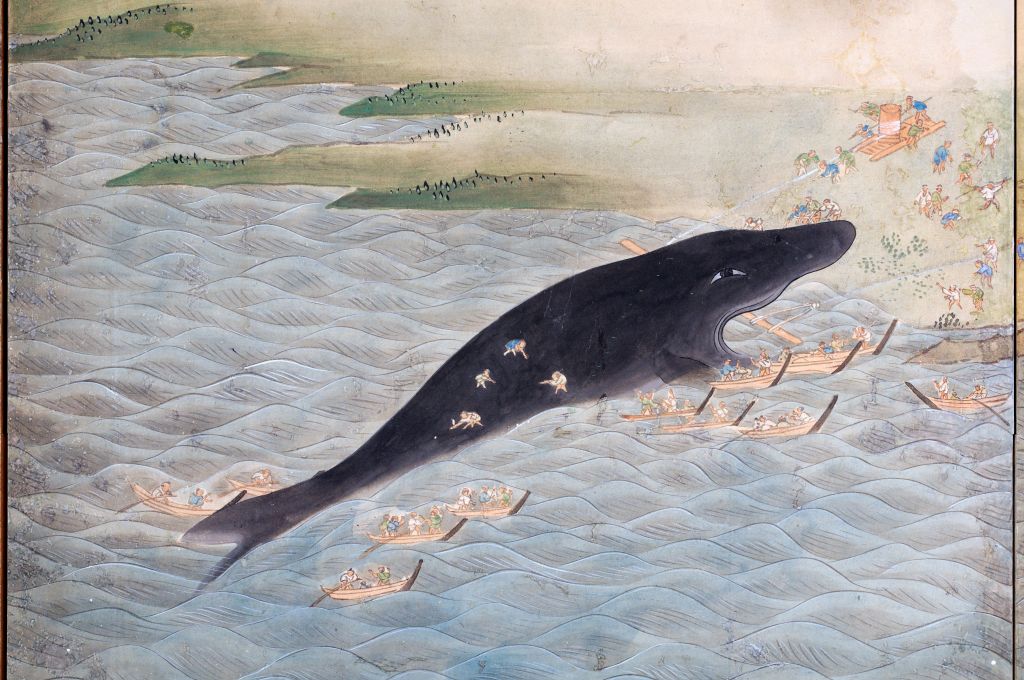
Whale God Ukiyoe

In pre-seafaring Japan—before Samurai William brought the secret of keels and ocean-going vessels—fishermen were limited to the coastal waters their small ships could take them too. They eked out a subsistence living harvesting what was in reach. But every now and then, the oceans would deliver a bounty beyond imagination.

Whales would sometimes come inland, or beach themselves on the shore. Fishermen hunted these whales in a practice called Passive Whaling, using harpoons to kill the whale that was trapped in the shallows. This was a rare and auspicious event—a single whale provided vast amounts of meat and resources for the village, and seemed like a gift from the gods. And the whale itself was only a piece of the bounty. Whales often came in following larges schools of fish, so their arrival meant an abundance of sea life beyond the leviathan itself. The arrival of a whale could save a village teetering on the edge of starvation and ruin. It was mana from the oceans.

Passive Whaling Ukiyoe

Like modern Cargo Cults, the villagers could not understand from where or why the whale came in to shore. They only knew that a whale meant wealth and rare full stomachs. Whales were considered to be embodied deities (神体; shintai), and whale religions sprang up in coastal villages, called Hyochakushin (漂着神; Drifting Ashore God) or Yorikami Shinkyo (寄り神信仰; The Religion of the Visiting Kami).

The Whale and Ebisu

These original whale cults were primitive. The people praying generally had one request—send more whales. But in time they evolved. Like many religions, the Whale Cults in Japan were built on a portion of respect and gratitude and a portion of fear. Because whaling—even Passive Whaling—was a dangerous operation, some whale religions also saw in whales the ability to be malevolent gods, and prayed to appease their spirits and assuage their wrath. Bad storms of poor catches could mean an angry whale god, and nobody wanted that.

In time, these whale religions merged with another, more popular deity, the god of abundance Ebisu. Whales were first thought to be emissaries of Ebisu, and then became considered to be an incarnation of Ebisu himself. Because whales were thought to have the power to control fish, fishermen began carrying images of the god Ebisu as a whale to give them the same fish-controlling powers.

Kujira Jinjya – Whale Shrines

120713_1102

When you have feasted on the body of a god, it only makes sense to give the leftovers a proper burial. After stripping the body of everything useful, villagers buried the whale carcass in mounds called Kujira Tsuga (鯨塚; whale mounds). Kujira Tsuga were capped with monuments of some sort, varying from carved stone tablets to pagodas to small wooden or rock shrines. Often these Kujira Tsuga were created in memory of some particularly bountiful harvest, and annual festivals where held like the Daihyo Tsuifuku (大漁追福; Big Catch Memorial Service). Or people prayed to the Kujira Tsuga for Kaijyo Anzen Kito (海上安全祈祷; Prayers to Ensure Safety at Sea).

Places where passive whaling was more prevalent also had Kujira Haka (鯨墓; whale graveyards) and Kujira Ishibumi (鯨碑; whale stone monuments). There are about 100 known whale graveyards throughout Japan.

Many Kujira Tsuga have their own legends and myths. In Miyagi prefecture, Kesenmema city, Karakuwa town, a legend is told of a ship foundering in the storm that was approached by two massive, white whales. The two whales swam to either side of the ship and steadied it, guiding it into port before sailing away. From that day forward, the citizens of Karakuwa down abandoned their ancient custom of whale eating.

The legend is attached to the MIsaki Shrine in Karakuwa, but the connection is not exactly accurate. Misaki Shrine is an old Kujira Tsuga, raised over a whale corpse and topped with a stone monument expressing gratitude for the whale’s death.

In Ehime prefecture, Seiyo city, Akehama town there are three known Kujira Tsuga, one of which is high up in the mountains. The shrine is ancient, and overlooks the ocean. It now sits along the national highway route making it much more accessible. Hauling up that carcass must have been quite the event.

On June 21st, 1837 (Tenpo 8th), a massive whale came to shore directly underneath this shrine. This was during the Great Tenpo Famine, and the whale saved the entire area from starvation. The villagers gave the whale a posthumous Buddhist name, meaning roughly “The Great Whale Scholar of the Universe who Brings Health.” That was extremely rare at the time, as posthumous Buddhist names was an honor reserved for great lords. The shrine is still honored by the villagers today

Whalebone Tori Gates

Whalebone Tori Japan

By the Edo period, Japan had become a seafaring nation and created a whaling industry and culture. Whaling Associations established and maintained official Whale Shrines in coastal areas, many of which still exist today. Whale shrines were also built in Taiwan when it was under Japanese rule, usually dedicated to Ebisu.

The most dramatic of these have Whalebone Tori gates—the picturesque post-and-lintel design that signifies the presence of a kami spirit.. The oldest Whalebone Tori is in Wakayama prefecture, Taijicho town, called the Arch of Ebisu. Ihara Saikaku mentions this Tori in his book Nippon Eitaigura (日本永代蔵; Japan’s Warehouse of Eternity; 1688). The tori is probably much older, however. The newest whalebone tori is in Nagasaki, Shinkamigostocho town at the Kaido Jinjya (Shrine of the Sea). Dedicated in 1973, it was built by the Japan Whaling Association.

Nirai Kanai

In an odd and unrelated Okinawan legend, a whale dressed in a kimono was said to have brought the secrets of rice cultivation to Japan. You can read more about this in my article on Nirai Kanai.

The Curse of the Bakekujira

Island Whale Ukiyoe

There are two odd footnotes to the story of the bakekujira, that don’t really fit in anywhere else so I am sticking them on here at the end.

In the 1950s, manga artist Mizuki Shigeru was working on a kamishibai story about the bakekujira, and also eating a lot of whale meat. He suddenly came down with a terrible fever, that only stopped when he quit working on the story. He calls this the “Curse of the Bakekujira.”

In 1983, an intact whale skeleton was spotted floating off the shores of Anamizu, Ishikawa prefecture. The press jumped on the story naming it a “real-life bakekujira.”

Translator’s Note:

This article was done at the request of comic book writer Brandon Seifert, who does the incredibly cool folklore/horror comic Witch Doctor, as well as other things. If you are a folklore fan, I highly recommend his work. And look for the bakekujira to possibly pop up his boney head in one of Seifert’s upcoming comics!

Further Reading:

For more tales of ocean-going yokai, check out:

Umibozu – The Sea Monk

Funa Yurei

Nirai Kanai

The Appearance of the Spirit Turtle

Hashihime – The Bridge Princess

Mizuki Shigeru Hashihime

Translated and Sourced from Mizuki Shigeru’s Mujyara, Kaii Yokai Densho Database, Japanese Wikipedia, and Other Sources

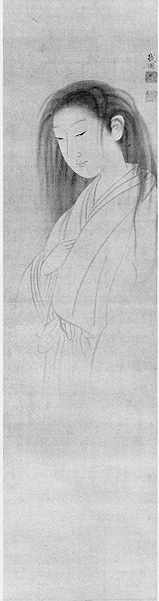
Nothing quite embodies the saying “Hell hath no fury like a woman scorned” like the Hashihime. A human woman consumed by jealousy and hatred, she transformed herself through sheer willpower—and the assistance of a helpful deity who taught her a complicated ritual—into a living demon of rage and death. A yokai from the Heian period, she is one of the most powerful and fierce creatures in Japan’s menagerie.

What Does Hashihime Mean?

With only two kanji, her name is straight-forward: 橋 (hashi; bridge) 姫 (hime; princess). But there is a secret meaning hidden inside. In ancient Japanese, the word airashi (愛らしい; pretty; charming; lovely; adorable) could be pronounced “hashi.” So “Hashihime the Bridge Princess” was also a homophone for (愛姫) “Hashihime the Pretty Princess.”

Segawa kikunojō no hashihime

The only real question is why does such a horrible demon have such a lovely, delicate name? This is because the name predates the monster. There have been Bridge Princesses—benign deities of the water—for far longer than there have been jealous women with crowns of iron and burning torches clenched between their teeth.

Hashihime as Water Goddess

Masasumi_Hashihime

Going back into ancient, pre-literate Japan, there has long been a mythology built around bridges. Japan was—and still is—an animistic culture where nature is embodied by spirits of good and ill. The wonders of nature, like particularly large and twisted trees or odd and out of place rocks, had their own guardian deities called kami. Rivers too, especially large rivers, were the abodes of gods.

Bridges across these rivers were the proverbial double-edged sword. They allowed you to cross for commerce and trade, but they also allowed enemies in. Any bridge of significant size was believed to have guardian deities that acted as gatekeepers, letting allies in and keeping enemies out.

The guardian deities of bridges were thought to be a matched set—you had both a male and female river deity, a Bridge Prince and a Bridge Princess. Shrines dedicated along these bridges were dedicated to both equally.

Overtime, the female deity became the more popular of the pair—she was thought to be luminously beautiful and sometimes appeared in human form.

In the year 905 CE, we get one of the oldest known written mentions of the Hashihime, in a poem from the 14th scroll of the Kokin Wakashū (古今和歌集; Collection of Poems of Ancient and Modern Times). This is especially notable because it mentions not just any Hashihime, but the Hashihime of Uji—a legend that would come to dominate all images of this fantastic creature.

“Upon a narrow grass mat
laying down her robe only
tonight, again –
she must be waiting for me,
Hashihime of Uji”

Hashihime as Female Demon

How the transformation happened—from benign, sexy river goddess to avatar of female rage—is unknown. Most likely it happened like all folklore, organically and over time. The shrines to the Hashihime existed near bridges, and as people forgot their original purpose they began to make up new stories. Most of these stories tended to include some legend of the Hashihime as “woman done wrong.” There are old legends of a woman whose husband went off to war and never came back, and she wept by the river bank in sorrow until she was transformed into the Hashihime. Others are stories of jealousy and revenge.

“Hashihime” is the title of one of the chapters of Japan’s first work of literature, Genji Monogatari (源氏物語; The Tale of Genji) and she is mentioned several times throughout. While the Hashihime is used mostly as a metaphor, Genji Monogatari tells the story of Lady Rokujo, a woman consumed and transformed by jealousy into a monster. Lady Rokujo becomes an ikiryo, a rare creature in Japanese folklore able to release their soul—their reikon—and all of its powers while they are still alive.

Kikugawa Eizan Hashihime Twelve Seasons of Genji

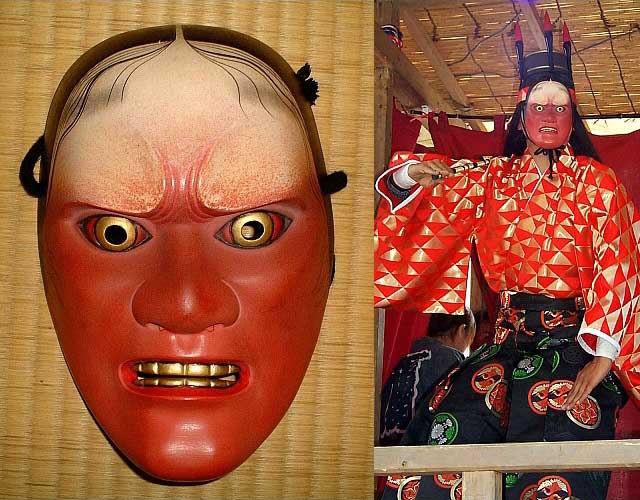
While Lady Rokujo is not the Hashihime, this story of the power of a woman’s jealousy caught the Japanese imagination, and more and more similar characters started to appear in theater and song. Noh Theater in particular loved the Hashihime, and the face of the Hashihime is one of the official masks of Noh.

The Heike Monogatari and the Hashihime of Uji

The story of the Hashihime was solidified in the Heike Monogatari (平家物語; The Tale of the Heike), an epic poem handed down by oral tradition not unlike The Odyssey. Because the Heike Monogatari was told by so many storytellers over so many generations, when written language was discovered multiple, conflicting versions of the poem made it onto the printed page.

Many of these versions told a story of the Hashihime of Uji. She was a noble woman who—by conflicting accounts—either had a husband who cheated on her, or who took a second wife and paid more attention to her. The unnamed woman prayed to the Kami of Kifune for revenge, and was given a complicated ritual that would turn her into a still-living oni.

For more details and a translation of the Heike Monogatari, see The Tale of the Hashihime of Uji.

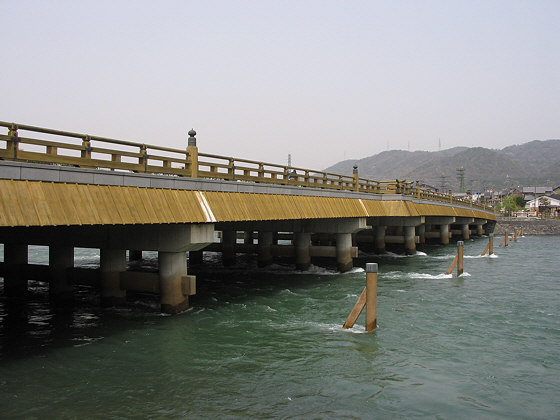
uji_bridge

The Heike Monogatari emphasizes repeatedly than the Hashihime is a “still-living” oni. This is different from other versions of the tale, where the woman dies in the river and rises again as the Hashihime (although not as a yurei. The Hashihime is never a ghost). In Japanese folklore, death has a powerful transformative effect—many stories follow the pattern of post-death revenge. So the Hashihime of Uji being a “still-living” oni adds and extra layer of unnatural terror.

The Hashihime of Uji influenced all following interpretations of the Hashihime, and remains definitive. When Toriyama Sekien put the Hashihime in his Konjyaku Gazu Zokuhyakki (今昔画図続百鬼; The Illustrated One Hundred Demons from the Present and the Past) he specifically referred to her as the Hashihime of Uji.

Toriyama Sekien Hashihime of Uji

Toriyama’s Text:

“The Goddess Hashihime lives in the under the Uji Bridge in Yamashiro province (Modern day Southern Kyoto). That is the explanation for this drawing of the Hashihime of Uji.”

Kanawa – The Iron Crown

hashihime Noh

The Noh play Kanawa (鉄輪; The Iron Crown) comes from one of the versions of the Hashihime story from the Heike Monogatari. In this version, the courtly woman has a husband who takes a second wife, as was the custom at that time. The woman is overcome with jealousy about the second wife, and tries to curse and kill her. But her husband has consulted with the great yin/yang sorcerer Abe no Seimei, who arrives at the last moment to break her curse.

Abe no Seimei then constructs a katashiro, a paper amulet in the form of a human, that reflects the curse back on the first wife, transforming her into a demon. (At this part of the play the lead actor changes into the Hashihime mask). Ashamed of her appearance, the woman (now the Hashihime) flees back to the river, jealousy and revenge burning in her heart.

The Hashihime again attacks the second wife, but is beaten off my Abe no Seimei with the assistance of 30 kami spirits. The Hashihime claims she will return, and disappears.

Other Hashihime

Although she is by far the most famous, the Hashihime of Uji is not the only Hashihime. Nagarabashi bridge over the Yodogawa river in Osaka and the Setanokarabashi bridge over the Setagawa river in Sega prefecture also lay claim to their own Hashihimes.

The Hashihime Shrine

hashihime_shrine

A little off the beaten path, near Uji Bridge, you can find the Hashihime Shrine. It isn’t a big place, and people might not be so eager to guide you there because of the shrines’ reputation—and what it is for.

Shrine records claim the Hashihime Shrine dates back to 646 CE, making it older than most known legends of the Hashihime of Uji. Most likely it was originally dedicated to the water goddess under the bridge, and the kami of the shrine evolved along with the legends.

The shrine is unusual in that it is essentially a divorce shrine. People come—mostly women, to be honest—to pray for freedom from difficult or unwanted attachments. This can be anything or anyone you want to be free of, but in practice most women come to pray for divorce or miscarriage.

The shrine even sells you something to help you on your way. Most Shinto shrines sell some sort of amulet, something to protect you from bad spirits. The Hashihime Shrine does too—it sells magical scissors that you can use to metaphorically cut yourself from entanglements, all without needing to transform yourself into a still-living oni bent on revenge.

Further Reading:

The Hashihime is the last in my series on trivet-wearing yokai. For the rest of the trivet-wearing yokai, check out:
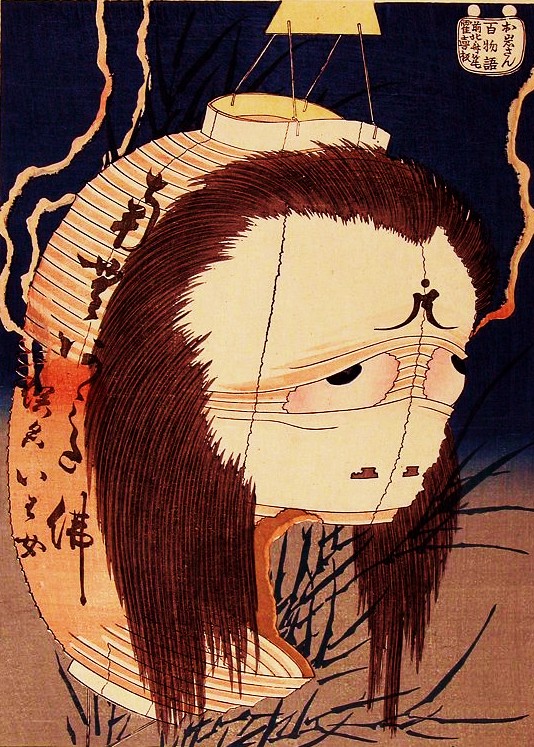
The Tale of the Hashihime of Uji

Ushi no Koku Mairi – The Shrine Visit at the Hour of the Ox

Gotokoneko – The Trivet Cat

Translator’s Note:

This is part 2 of the long-requested Hashihime. I translated the text from the Heike Monogatari for the first part, and this entry gives more of the history and context. The Hashihime is a favorite of mine because I have spent quite a bit of time in Uji. Uji is one of my favorite places in all of Japan. You really should go there if you are ever in Japan. It is stunningly beautiful, with century-old teashops and the magnificent Byoudoin temple. Of course, you must also visit the Uji Bridge where the Hashihime dwells and the Hashihime Shrine to pay your respects.

The Tale of the Hashihime of Uji

Toriyama Sekien Hashihime of Uji

Translated from the Heike Monogatari

During the Imperial reign of the Emperor Saga, there lived a courtly lady consumed by jealousy. So powerfully was she in jealousy’s grip that she made a pilgrimage to the shrine at Kifune and cloistered in prayer. For seven days, she devoted herself to a single-minded wish: “Oh great and powerful Kami of Kifune, grant me the powers of a devil while I am still living. Make me a fierce being, terrible to behold. Let my outer form match the flame of jealousy that burns so brightly within. Let me kill.”

That great miracle-working Kami of Kifune understood the depths of her desire, and heeded her call. “I am moved by pity and by the sincerity of your prayer. If you wish to become a living oni, to change into a monstrous form, get thee to the Kawase river in Uji. Perform the ceremony I shall now teach you, and then return to submerge yourself in the waters of the river. Do this for 21 days.” This courtly lady saw and heard the manifestation of this celestial being, and was in rapture.

The woman returned to the capitol city and made her preparations. She found a secluded spot where she could work her magic. First, she twisted the long strands of her hair into five horns. Then she ground cinnabar for her face and vermillion for her body until she was as bright red as an oni of legend. Finally, she crowned her head with a three-pronged trivet, and set in it three torches of burning pine. In her teeth she clenched two further torches.

Her preparations complete, she ran south down Yamato-oojidori, torches blazing in the deep night, skin bright red and with an iron crown resting on her eyebrows. Her every aspect was that of an oni, and all who saw her collapsed, dying of terror at the manifested horror they had seen. At the end of her path was the Kawase river, where the lady dutifully sank beneath its waters. As promised by the Kami of Kifune, after 21 days she transformed in living body into an oni, the dread Bridge Princess called Hashihime.

In this way the Hashihime took her revenge on the man who was the target of her jealousy, and all of his relatives above and below. Her wrath knew no boundaries. When she slew men, she appeared as a woman. When she slew women, she appeared as a man. All in the town were a’ feared of her, and during the Hour of the Monkey none dared leave their dwelling.

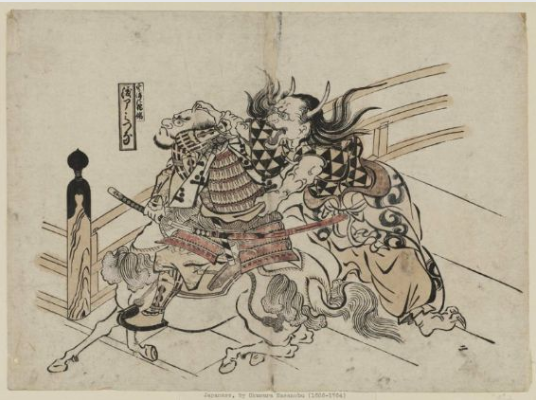
Utagawa_Kuniyoshi_Watanabe_no_Tsuna_and_the_Hashihime_of_Uji

At that time, the lord Minamoto no Yorimitsu had four brave fighters and protectors. Known as the Four Heavenly Kings, they were Watanabe no Tsuna, Kimitoki, Sadamichi, and Suetake. Of these Tsuna was the greatest.

Yorimitsu had business in the town of Ichijo Omiya and dispatched Tsuna as a messenger. Tsuna arrived on horseback in the dead of night, the famous sword Higekiri (Beard Cutter) tucked into his obi. He planned a short trip, and to soon return with a message for his master. Yet when he crossed the Modari Bridge over the Hori river, on the Eastern side he saw a beautiful woman of a bit more than 20 years of age. Her skin was as white as new-fallen snow, so much that she had the visage of a yurei. Yet he saw the flair of her under-kimono peeking out—red as the red-blossomed plum tree. She bore a sash across her chest, and a sutra in the folds of her sleeves.

She stood on the bridge, facing South. She was quite alone. Tsuna mounted the bridge from the West, and the sound of his horse cracking the silence of the night.

The woman called out, “What business is yours? I am making a pilgrimage to Gojo. It is dangerous to travel alone at night. You gave me a scare!” Her tone was overly familiar for such a meeting. Tsuna answered “Come upon my horse. It would be my pleasure to help you on your errand.”

Tsuna brought his horse near and dismounted, then lifted the woman into the saddle. She held the warrior tight, as he spun his horse around and headed West. The woman directed him towards Shogimachi, saying “Great sir, in truth I am not on a pilgrimage to Gojo. My home lies a little bit outside of the capital. If you would do me the honor of taking me as far as the gates, I would be in your debt.”

Tsuna complied, saying it would be his pleasure to see the lady home. With that, the woman changed into the form of an oni, saying “It is I who shall be taking you to Mt. Atago!” She grabbed Tsuna’s topknot and flew into the air taking Tsuna with her. Tsuna was caught off guard for only a moment, before drawing Higekiri and slicing off her arm mid-air. He looked into the sky and saw the North Star as he plummeted to earth. Tsuna flees, the hand of the severed arm still holding his topknot. Where the hand held tight his hair had turned white as snow.

Okumura_Masanobu_Watanabe_no_Tsuna_and_the_Hashihime_of_Uji

Tsuna gave Lord Yoshimoto quite a shock when he returned, severed arm still firmly in place. The sorcerer Abe no Seimei was summoned, who advised Tsuna to be given seven days leave, during which time he must pray to the two Deva kings for release from the arm.

Translator’s Note:

Part one of the long-requested Hashihime. I will do a standard entry next with the history and different versions of the yokai, but I thought it might be fun to translate the actual Heiki Monogatari passage on Hashihime instead of just referencing it. Apparently I have a strange idea of fun … Heian period Japanese is hard!

This is only one version of the tale of the Hashihime of Uji. Because the Heiki Monogatari comes from an oral tradition, there are multiple versions of every tale. The second tale, of Tsuna and the sword Higekiri cutting off the arm of an oni, is only sometimes connected to the Hashihime (and even then only marginally). Other times he meets the oni at the Rashomon gate and cuts off its arm there. The tale follows with the oni coming back to Tsuna in some hidden form and stealing back its arm.

Further Reading:

For more tales of dangerous women on hyakumonogatari.com, check out:

Ushi no Koku Mairi – Shrine Visit at the Hour of the Ox

Nure Onago – The Soaked Woman

Takaonna – The Tall Woman

Tesso – The Iron Rat

Mizuki_Shigeru_Tesso_Iron_Rat

Translated and Sourced from Mizuki Shigeru’s Mujyara, Kaii Yokai Densho Database, Japanese Wikipedia, and Other Sources

In Japanese folklore, if you make a promise you had better keep it—even if you are the Emperor of Japan. Otherwise, the person you betrayed might hold it against you and transform into a giant rat with iron claws and teeth and kill your first-born son. That is the story of the Emperor Shirakawa, his son Prince Taruhito, and the Abbot of Miidera temple Raigo—better known as Tesso, the Iron Rat; or more simply as Raigo the Rat.

What Does Tesso Mean?

The kanji for Tesso is about as straight-forward as you can get. 鉄 (te; iron) +鼠 (sso; rat). The name Tesso was given to this yokai by artist Toriyama Sekien in his yokai collection Gazu Hyakki Yako (画図百鬼夜行; The Illustrated Night Parade of a Hundred Demons,), although the character is much older.

SekienTesso

Toriyama’s Text: The Abbot Raigo transformed into a monsterous rat.

Tesso is different from many yokai in that he is a singular character. There is only one Tesso. Until Toriyama came up with the much cooler name for his collection, Tesso was known as Raigo Nezumi (頼豪鼠), meaning Raigo the Rat.

The Story of Raigo the Rat

The tale begins with the Emperor Shirakawa, who was desperate for an heir to his throne. He enlisted the aid of the Abbot of Miidera temple, a powerful Buddhist monk named Raigo. Emperor Shirakawa promised Raigo vast rewards if he could use his spiritual powers to give the Emperor a son. Accepting the offer, Raigo threw himself into meditation and prayer and magic. Soon enough a son was born to Emperor Shirakawa, the Prince Taruhito.

Yoshitoshi_The_Priest_Raigo_of_Mii_Temple

Raigo went to the Emperor for his promised reward, and asked only for the funds to build an ordainment platform at his temple of Miidera. The Emperor was too happy to oblige, until temple politics interfered.

Miidera had a rival temple, the powerful Enraku-ji in Mt. Hiei in Kyoto. The monks of Enraku-ji were not normal, peaceful monks, but a terrible army of militant warriors feared across all Japan. It was said the Emperor could influence all on Earth except three things—the blowing of the wind, the rolling of dice in a cup, and the monks of Enraku-ji. Even though they were both of the Tendai sect of Buddhism, Miidera and Enraku-ji has split into different factions after the death of their founder. Enraku-ji was not about to allow new Tendai monks to be ordained at Miidera, a privilege they reserved for themselves.

The Emperor had no choice but to break his promise to Raigo. He asked if there was anything else he could give, but Raigo was adamant. So adamant, in fact, that he went on a hunger strike and died after 100 days, cursing the Emperor with his final breath. At the house of his death, a figure in white was said to have appeared beside the cradle of the 4-year old Prince Taruhito, who died soon afterward. What Raigo had given, Raigo had taken away.

What happened next was strange—up until now this is the usual ghost story with Raigo returning as a yurei. But the tale does not end there. Raigo used black magic to ensure he was reborn after death as a dread yokai. He twisted his body into the form of a giant rat as large as a man, with a body as strong as stone and with claws and teeth or iron.

The newly-named Raigo the Rat invaded Enraku-ji with an army of rats, devouring their rare and valuable Buddhist scriptures, and even eating statues of the of the Buddha himself. This reign of rat-terror when on until a shrine was built to appease Raigo, transforming him from a deadly emissary of vengeance into a protecting kami spirit. Because that’s how evil spirits roll in Heian-period Japanese folklore.

Raigo the Onryo

Old texts describe Raigo as an onryo, the name for the grudge-bearing spirit popular in Japanese horror films. Raigo wouldn’t be seen as an onryo nowadays—his transformation into a rat makes him more of a monster than a ghost. But in the Heian period the word onryo had a more specific meaning, being something with a grudge against the Emperor of member of the Imperial family. And that label suits Raigo just fine.

Raigo and the Heike Monogatari

The story of Raigo comes from the Heike Monogatari (平家物語; Tale of the Heike) an epic poem from the Heian period that tells of the Heike/Taira wars that split Japan as two factions struggled for the throne. The Heike Monogatari is often called Japan’s version of The Odyssey, freely mixing historical fact with the supernatural and mythological.

Because the Heike Monogatari comes from an oral storytelling tradition, there are multiple versions of it with variations of the story of Raigo the Rat. In one of the older versions—the Engyo Hon (延慶本; Book of the Engyo Period), the story ends with the death of Prince Taruhito. In later versions Raigo gets more and more monstrous. The 48-volume Genpei Seisuiki version has Raigo attacking Enraku-ji with his army of rats, and in the 14th century historical epic Taiheiki (太平記; Record of the Great Peace) Raigo is described as having a body of stone and claws and teeth of iron. This Raigo ate not only the sacred texts of Enrakuji, but also their statue of Buddha.

Other Tales of Raigo

Raigo the Rat was a popular enough character that other writers continued the story after the Heike Monogatari. For example, a collection of Tanka poems from Otsu city, Shiga prefecture called Kyoka Hyakumonogatari (狂歌百物語; A Hundred Stories of Satirical Poems) featured the poem Raigo of Miidera and retold the story from the Heike Monogatari.

During the Edo period, author Gyokutei Bakin wrote the story Raigo Ajari Kaisoden (寺門伝記補録; The Tale of the Abbot Raigo who Transformed into a Monsterous Rat), illustrated by famous ukiyo-e artist Katsushika Hokusai.

Raigo_Ajari_Kaisoden

Gyokutei puts Raigo into a different historical narrative, telling the story of Shimizu Yoshitaka (also known as Minamoto no Yoshitaka), the orphaned son of Minamoto no Yoshihara. Yoshitaka was on a pilgrimage of holy sites when he had a vision of the Raigo, who told Yoshitaka he would teach him the secrets of black magic and help him amass an army to take vengeance against his father’s killers. All Yoshitaka has to do is write an official request for help, and place it before Raigo’s shrine along with a donation.

Yoshitaka does as requested (of course), and soon finds himself in possession of Raigo’s shape-changing ability and mastery over rats. As an additional twist, Yoshitaka is hunted by Nekoma Mitsuzane (who’s name ironically begins with the kanji for “cat” in a traditional cat-and-mouse game). In one scene, Nekoma finds Yoshitaka and is about to kill him when a massive rat leaps to Yoshitaka’s defense. In another scene, Nekoma is torturing Yoshitaka’s mother-in-law and Yoshitaka leads and army of rats to her defense, saving the day.

Hundreds of years later, Raigo still has a hold on the popular imagination. Modern author Kyogoku Natsuhiko used the story of Raigo as the basis for his mystery novel “Tesso no Ori” (鉄鼠の檻; The Cage of the Tesso).

The Historical Raigo

Although the tale of Raigo the Rat is fictional, most of the key players are historically verified. Shrine records show Raigo was the Abbot of Miidera, and at one time petitioned Emperor Shirakawa for funds to build an ordination platform—a petition that was denied. There is little doubt that rival temple Enraku-ji played some hand in the denial. At the time, Enraku-ji’s power was absolute.

The only person not involved in the affair was Prince Taruhito. Records put the young Prince’s death in 1077, while Raigo himself died in 1084. This contradicts the facts of the legend.

Hokusai_Tesso_Monster_Rat

Rats, of course, were an actual source of fear to the fragile book collections of temples across all of Japan. So it is no wonder that a double-punch of an angry spirit and a scroll-eating rat was a natural mixture for Kaidan.

Tesso Shrines

There are a couple of supposed shrines to Raigo, each claiming to be THE shrine that ended Raigo’s scroll-devouring revenge.

In Hyoshi Taisha, in the Sakamoto district of Otsu city, Shiga prefecture, there is a shrine called the Shrine of the Rat that some connect to Raigo. Shrine records, however, say that the shrine is dedicated to the Rat God of the Chinese Zodiac and not to Raigo.

Tesso Shrine of the Rat

Miidera shrine has the most obvious connection, and has a small monument and shrine dedicated to Raigo also called the Shrine of the Rat. This shrine faces directly at Mt. Hiei in Kyoto and is said to be placed in defiance of Enraku-ji’s role in Raigo’s curse.

However, Mt. Hiei has their own shrine—the Shrine of the Cat—that looks directly at Miidera. Some suspect the two shrines are connected by an older legend of a monk who summoned a giant cat to destroy a giant rat that was menacing the area.

In truth, probably both of these Shrines of the Rat were re-dedicated to suit interests in the story. Like Relics in Catholic churches, a shrine or artifact connected to a popular legend can mean tasty tourist dollars and neither Buddhist temples nor Shinto shrines never let the facts get in the way of a good story. Especially one that attracted tourists.

Translator’s Note:

This was translated for Mike Mignola, who picked out Tesso from a copy of Mizuki Shigeru’s Mujyara that I showed him at Emerald City Comic Con. Mignola liked the illustration of Tesso, and I am only too happy to give him the story behind the image.

Plus, I did a lot of cats last year. It is only fair that at least one rat gets to appear as well.

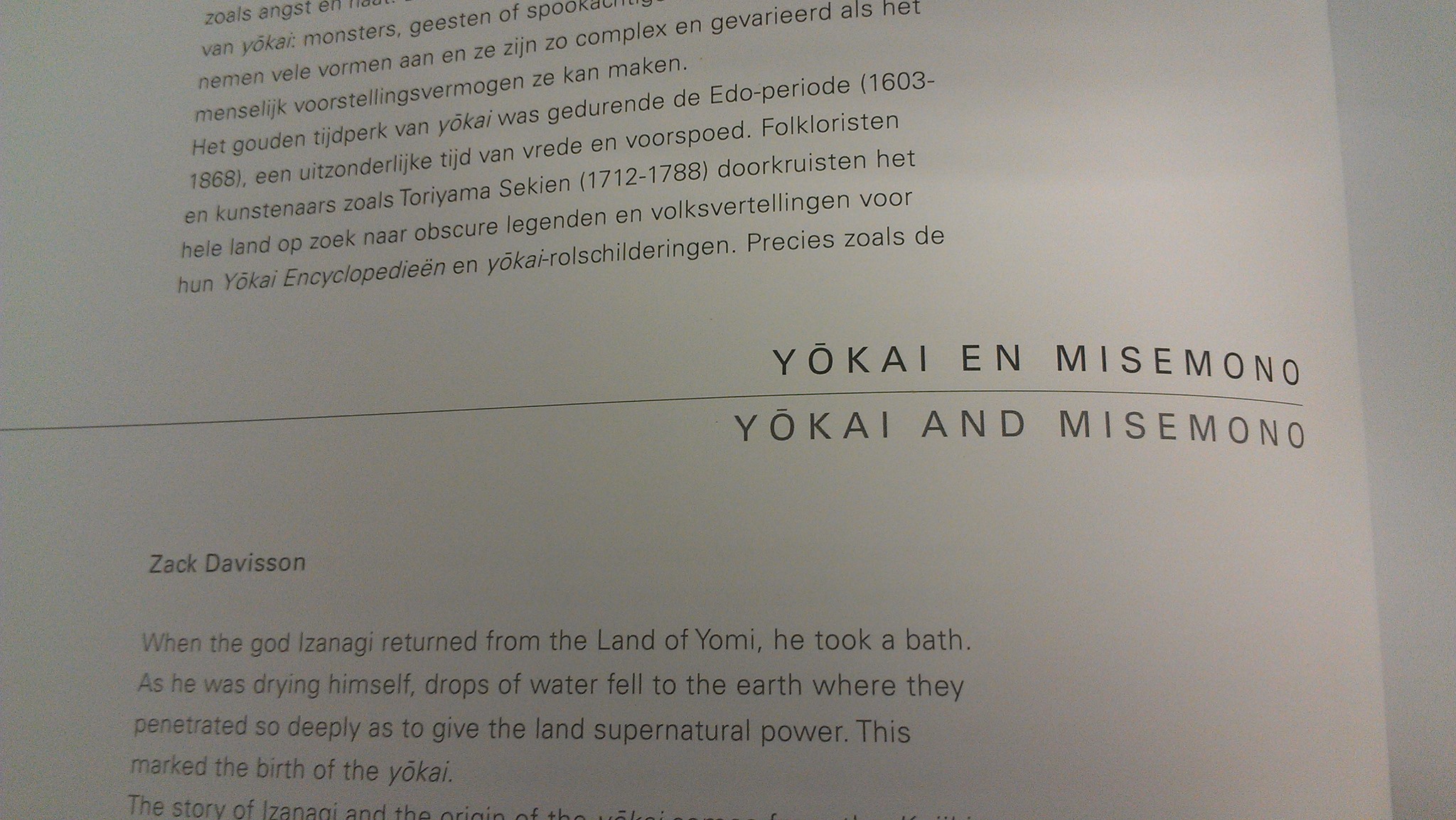
A Brief History of Yokai

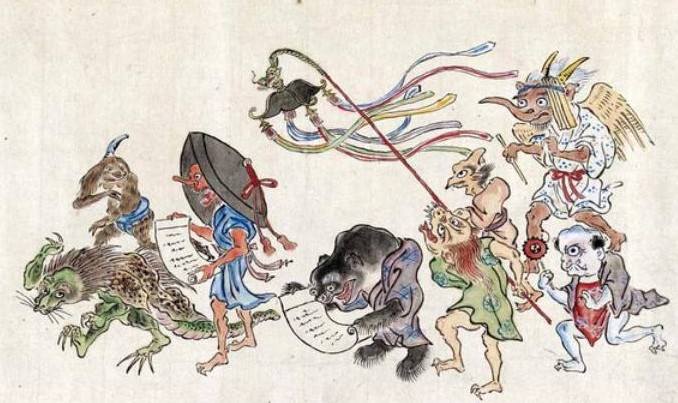
NightParadeof1000demons

When the god Izanagi returned from the Land of Yomi, he purified himself in a bath. As he dried his body, each falling drop of water soaked into the soil and imbued the land with supernatural potential. Thus, the yokai were born.

The story of Izanagi and the origin of yokai comes from the oldest known work of Japanese literature and the basis of Japanese mythology, the 8th century Kojiki (古事記; Record of Ancient Matters). In Japan’s creation myth, the land itself—the rocks, trees, mountains, and rivers—are infused with latent magical energy. This energy needs only a focus to give it life. Just as nebulous gas ignites to form stars, this energy is compressed by events like volcanoes or earthquakes, or strong human emotions like fear or hatred, until it emerges as one of Japan’s menagerie of monsters and phenomena. Yokai take many shapes, and are as varied and complicated as human imagination can make them.

Yokai have not always been a single tradition. In ancient times, small tribes and kingdoms populated the island. Each isolated region gave birth to its own rich folklore, its own gods and monsters. It took the conquering and warlike Yamato clan in the 3rd century to subdue these tribes into a unified nation and culture. As centuries passed, new technologies like the printing press allowed regional folklore to spread. People learned for the first time what scared their neighbors when the lights went out.

The Golden Age of yokai was the Edo period (1603-1868), an unprecedented time of peace and prosperity. Folklorists and artists like Toriyama Sekien (鳥山石燕; 1712 – 1788) scoured the country for obscure legends and half-whispered folktales to populate their Yokai Encyclopedias and illustrated yokai scrolls. As the Brothers Grimm did for Germanic folklore, Toriyama and others rescued these stories from obscurity by putting them on paper at a time when oral traditions were vanishing.

Yokai almost disappeared following the Edo period, when Japan was swept up in a mania for modernization. When meeting with the Western powers, the country was embarrassed of its provincial passion for the supernatural. The government tried to sweep yokai under the carpet in favor of rational thinking and scientific advancement. As the military took over and Japan plunged into the darkness of WWII, the yokai were forgotten.

But one young man remembered. Comic artist Mizuki Shigeru (水木しげる; 1922 – Present) was raised on yokai stories told by his village wise woman. When he came home from the war, he started working in the new manga industry, drawing the stories he had heard as a boy. His comic Ge ge ge no Kitaro (ゲゲゲの鬼太郎) became one of Japan’s most popular comics, and Mizuki taught all of the children of Japan about the country’s mythical past.

Mizuki Shigeru’s influence continues, and yokai are again known throughout Japan. Children who grew up on Mizuki’s comics started creating their own yokai stories. People like Shibashi Hiroshi (椎橋寛; 1980 – present) created comics like Nura: Rise of the Yokai Clan (ぬらりひょんの孫), which were then translated into other languages and spread the yokai phenomenon across the world.

Further Reading:

What Does Yokai Mean in English?

Secrets of the Yokai – Types of Yokai

Secrets of the Yokai II

Translator’s Note

I have been consulting on a Yokai Art exhibition that is being held at the Wereldmuseum in Rotterdam, The Netherlands. This is a short little piece I wrote about this history of yokai and its connection with modern manga, that will be used as an introduction to the exhibition. Just thought I would share it with everyone.

History of Yokai

But don’t worry–I am still working on Hashihime for my next post!

Previous Older Entries Next Newer Entries

Copyright notification

All translations and other writing on this website were created by Zack Davisson and are copyright to him.

Copyright notification

In accessing these web pages, you agree that any downloading of content is for personal, non-commercial reference only.

No part of this web site may be reproduced or transmitted in any form or by any means, electronic, mechanical, photocopying, recording or otherwise, without prior permission of Zack Davisson.

Copyright notification

For rights clearance please contact Zack at:

zack.davisson (at) gmail.com

Thank you.